Tag Archives: personal change

Wanna Be Happy At Work?

We spend an awful lot of time at work to spend our time there unhappy. So, if you’re unhappy at work, you need to do something about it.  Years spent unhappily at work are wasted.  There are four ways to get happier at work.

The first thing to do is to figure out WHY you aren’t happy?

  • Is it the job?  Do you not like doing what you do at work?  Are you not well suited for the tasks?
  • Is it the people?  Do you not get along with the people at work?
  • Is it that you don’t feel appreciated or rewarded?

Is it you, or the job?

Before you automatically say that it is the job, think about it harder.  Have you seen this same pattern of unhappiness at other jobs?  With other bosses?  With other co-workers?  If you have a similar pattern of unhappiness in other positions, there may be some way that you are thinking that is contributing to your unhappiness.

If it is the job, you have four choices:

  1. Change WHERE you’re working–go find a job doing the same thing somewhere else. If you really like what you do, but not where you’re doing it, this is your solution.  This applies to situations when your company culture or your co-workers are the problem.
  2. Change WHAT you’re doing–find a different job, doing something else.  You can do this at your current organization–change from marketing to product development, from project management to operations.  Sometimes it’s easier to change what you’re doing at you current company, then move on to another company once you’ve had some experience.  Sometimes it is time to go do your dream job–writing, selling, starting your business.
  3. Change HOW YOU VIEW work–realize that work is a means to an end–it is what you do to be able to afford what you love.  Or it is a way to get to what you want long-term.  When you’re focused on the future, the here and now is much more bearable.
  4. Change the WAY you work–so that you love the work that you have.  Create an environment that motivates you and inspires you to do your personal best.

Whatever you do, do something.  Don’t stay unhappy at work.  It isn’t worth it.  And it is your choice.

Leave a comment

Filed under Career Development, Executive Development

Personal Change Management

Personal Change Management Is More Important Than OCM

“Organizational change management” is usually listed on job descriptions as a required skill for executives.  Don’t get me wrong, it is a critical job skill.  Personal change management is just much more important.  When you are good at personal change management, you can come across as a “can do” person, instead of a nay sayer.  You can help others with the change because you aren’t wrapped up in your own issues with the change.  In order to be good at personal change management:

  • You must understand the normal human reactions (including yours!) to change and learn how to manage yourself through those reactions while you help your team through them.
  • You must be able to recognize when you’re resisting and be able to ‘lead’ yourself through that resistance.
  • You must be able to recognize when you have hit your capacity to deal with change and find ways to expand that capacity or eliminate some of the stress that is filling it up.
  • You must be able to initiate personal change in your life in order to accomplish your goals through understanding the steps, incentives and processes that it takes to change the habits and mental models that are controlling your behavior.

As a leader, you have to be able to manage yourself through change while you’re helping others.  As an executive, you need to be able to initiate and control the personal change it takes to accomplish your personal and career goals.

Personal Change Reactions

People going through changes, good and bad, have some pretty standard reactions.  Not every person has all these reactions for all changes, but most people have most of these reactions for most (big) changes.  Think about when you found out you got a job or when you lost a job, when you found out you were having a baby, or you had a car accident–you had most of these reactions.  Change means you go from the status quo to some new state.  That shift requires some mental gymnastics to get you from one to the other.

In order to get good at dealing with personal change, it is critical that you become self-aware enough to recognize the reaction in yourself, and then learn how to move yourself through the change curve to exploration to acceptance to commitment.  There are two important things to remember in this process:

  • These reactions are completely normal.
  • You will get to the acceptance  and commitment stages, and it will feel like a ‘new normal.’  It will get better.

Personal Change Resistance

Again, resistance is a normal reaction to change.  One of my favorite change management gurus, Peter de Jager, says people don’t resist change, they resist being changed.  Unfortunately, we experience many of the changes at work as ‘being changed’ rather than choosing to change.  We resist change  because:
  • “I don’t know how” (An ability deficiency)
  • “I don’t want to” (A willingness deficiency)
  • “I just can’t” (A capacity deficiency)

When you notice resistance in yourself, ask yourself which kind of resistance is it?  How can you help yourself get past it?  What would it take for you to know to reduce your resistance?  Why don’t you want to?  How can you persuade yourself to try?  What can you change about the circumstances that make it better?  What about your capacity to change?  Can you do something to increase that?

Capacity to Change
EVERYONE hits a wall from time to time when it comes to change.  We all have a capacity to deal with change.  Some of us have a naturally high capacity or a naturally low capacity.  Then things start to happen.  Beginnings and endings–relationships, marriages, babies, jobs, deaths, illnesses, living arrangements, finances.  These things ebb and flow.  I have four kids and I used to say, as long as no more than two were off the tracks at once I could handle it–if another one had problems, then I had a hard time dealing with it over and above everything else.  If you add in big changes at work–new boss, reorganization, downsizing, job loss, then your capacity gets used up.  This overflow ebbs and flows too.  When you’re aware that your capacity is filled up, then you can reframe the situation, change the way you’re thinking about it.  You have control over managing your capacity.  This does NOT mean that you ignore or deny what is happening.  It means that you help yourself reframe what is happening so that you relieve some of the overflow and increase your capacity.
Initiating Personal Change
Organizations need Organizational Change Management because they are initiating strategic change–new processes, new systems, new organization structures–to achieve organizational goals.  Executives need to learn to initiate the same kind of personal strategic change and do personal change management through the process.  We all try to initiate personal change from time to time (New Year’s Resolutions, anyone?), but statistics say that few of us actually succeed at them.  It takes an accompanying personal change management approach to make those changes stick.  You must understand what behavior, motivation, incentive, learning, communication and metric changes it will take to make the change stick.  Then, treat it as if it were the same as making a change happen with your team.  Put the things in place that will incent, motivate, inspire and reward you to make the change.

11 Comments

Filed under Career Development, Career Goals, Executive Development, Leadership, Personal Change, Success

How Do You Know When You’re In Trouble With Your Boss?

I used to get feedback on 360° assessments that I was unreadable.  I didn’t do much about it because I really didn’t see it as a problem.  I knew what was going on inside my head and I wasn’t thinking anything bad about any of the people who found me difficult to read.  I knew that if something was wrong, I was crystal clear with the person who did whatever it was.  I’m a direct person and I was direct with those who made me unhappy.  If I wasn’t unhappy, then, despite the fact that I was “unreadable,” everything was OK.

Unfortunately, no one but me had access to what was in my head.  My employees created versions of what was going on in my head.  Most of those versions not only weren’t correct, they were really way off.  I know this because they told me later.  After I learned to be more obvious about what was going on in my head.  After I learned to be direct to people who were doing things right.  People stop being scared of what is going on in your head when they know that you’ll tell them.

BadBoss

This post is about signs that your boss really DOES have a problem with you.  How do you know what is going on in your bosses head when it isn’t obvious?  You have to look for the more subtle signs.  The first thing you have to do, though, is to give your boss the benefit of the doubt.  Assume that your boss is happy with your performance if you don’t see signs otherwise. Some signs to watch out for and to take seriously are:

  • If your boss doesn’t meet your eyes.  Unless your boss does this with everyone, it isn’t a good sign.
  • If your boss avoids you.  This one isn’t as straight-forward.  Sometimes bosses have cliques or favorites.  If s/he spends more time with others than with you, then that isn’t necessarily a bad thing, although it’s not necessarily good boss behavior.  Pay attention to whether you are the only one on the out.  If not, give your boss the benefit of the doubt (we’ll talk another time about how to deal with bosses who have favorites).  Assume that things are ok, maybe could be better, but are ok.  If, however, your boss really obviously avoids you, then you have a problem. 
  • If your boss constantly finds fault.  Again, is it just you or is s/he this way with everyone?  If s/he is like this across the board, then I’d go get another boss, but it isn’t specifically bad for you.  If, however, the boss nit picks everything you do, you are in trouble.  This could be a style or a communication problem, but whatever it is, it is a problem.
  • If your boss gives you worse assignments than anyone else.  Sometimes you get harder assignments because your boss thinks you can tackle harder issues than others.  If, however, your boss is giving you easier assignments or impossible assignments, then try to figure out why.  Are you new at your job,or to the group?  Have you not lived up to expectations on previous assignments?  On the other hand, do you feel like the assignments that you’re getting are designed to make you fail?  The assignments you get should be at least as hard as those given to everyone else or harder if you’re more experienced or trying to get a promotion, but not impossible.
  • If your boss always takes someone else’s side.  You don’t have a problem if you boss occasionally takes someone else’s side (in fact, that is actually better than if s/he always takes your side).  If, however, you are always on the short end of the stick, then you’re got a problem.
  • If your boss doesn’t seem comfortable with you.  Try not to assume things that aren’t here, but if your boss seems uncomfortable in dealing with you, doesn’t have small social conversations with you, never  sits near you when the occasion arises, then you mayhave a problem.  (You’ll note that I’m not as clear about this one–bosses are regular people–they can be socially dysfunctional just like the rest of us.)

I hope that you’ve read this list and decided that despite appearances, your boss is just fine with you.  That is most likely the case.  If you recognize your situation here, then you need to do something about it.  Over time, I’ll write about what to do about each one of these situations.  If you have a specific situation that you’d like to have my suggestions on, let me know and I’ll give it a go.

Leave a comment

Filed under Career Development, Derailment, Personal Change, Recession Proof, Reframe

How Do You Get Motivated On Sunday?

Dreading Sunday Evening?

I recently had someone ask me how to get motivated on Sunday.  Great question!  My question is what do you need to be motivated to do?  I assume that when most people wake up on Sunday, they’re relatively motivated to do whatever is on the agenda for Sunday.  I assume that  the question is really about being appropriately motivated for Monday.  All of us have occasional difficulty with giving up our “off” weekend time to recommit to the structure and duties of the work week.  If you regularly dread going to work on Monday, and especially if you start that dread on Sunday, then it’s time to look at what’s going on.

Why Do You Dread Going To Work?

Are you dreading the start of the work week because:

  • You don’t like the work?
  • The atmosphere of work?
  • How you feel about yourself at work?
  • What you won’t be able to do?

Whatever it is, there are some things you can do about it.  Some are short term and others are longer term.  The first thing to figure out, if you can, is why you aren’t motivated.  That will help you understand what the best approach is. 

If you don’t like the work, then you need to figure out how to find different work (longer term solution).  The best way to be motivated to go to work is to do work that you love so much that it isn’t work.  Check out a previous blog post, Are You a Wanna Be, for some suggestions.  There are things that you can do, though, in the short term to help you get motivated.

  1. Reframe the way you think about work.  Figure out a way that the work you do now is a step on the way to doing the work you want to do.  What can you learn?  Who can you meet? Who can mentor you? What training can you get? What software or systems can you learn?  What resumé value can you get out of this job that will help you get the job you really want?
  2. Put something on your calendar every day that you can look forward to.  Put something very special on your calendar on Monday.  Have lunch with someone you really want to spend time with.  Block an hour to learn something new.  Read a book during lunch. 
  3. Plan out your next week on Friday and then set the plan aside until Monday.  Sometimes when you have a plan ready to go, you can relax and enjoy the weekend and start the week ready on Monday.  At the same time, you’ll work on next week’s tasks in your subconscious and may be further ahead when Monday starts.
  4. Understand the specifics of what motivates you and create an environment that is full of those things.  If you are a list person who loves to check off the “dones?”  Do you work for rewards?  Give yourself rewards.  If you work for approval, find someone who can/will approve when you accomplish things.  Create a motivation rich environment that helps you be eager to go to work.

If the reason you dread going to work on Monday is the atmosphere, then there are two things to do. 

  1. First, figure out what it is about the atmosphere.  Is it the people?  Is it the culture?  Is it what you are asked to do?
  2. Second, figure out how to change it. Moving away from the situation may be the long term solution.  Short term there are ways to get along with even the most difficult people.

Do you feel incompetent at work?  Do you feel like a failure at work?  These are frequently the reason that some people dread work.  Feeling incompetent is a completely normal way to feel when you are learning new skills.  It is not pleasant to be in that stage, but it is a normal stage, and it is relatively short-lived.  If you feel like a failure, you have to ask yourself–is it you or is it true.  If it is true, then take one step each day to turn it around.  If it is in your head, get therapy.  That is the fastest, easiest, safest way to solve that problem.

Is it that you want to keep doing what you do on the weekend, not what you do during the work week?  If so, what is it that you like so much about what you do on the weekend?  Spending time with your family?  Relaxing? Exercising? Working on your hobby?  Maybe there are some clues here about what your ultimate, dream work  should be.  Maybe these are some things that you could use to motivate  yourself (by scheduling more of) during the week.  Maybe these are some things you can set up as rewards to get motivated.  However you do it, if you’re doing things that make you happy on the weekend and not so much during the week, you need to fix that.

You Can Change This

The bottom line is that when you start dreading going to work, refocus your energy toward figuring out exactly what it is that is creating that dread.  You CAN have a life in which going to work on Monday is as fun as getting up Sunday.  You can create that life through deep personal understanding and by dealing with the situation in the short term while you work toward a plan for the long term.

2 Comments

Filed under Career Development, Personal Change, Reframe

Get Better At Your Job. Now.

How Good Do You Want To Be?

What kind of employee do you want to be?  What kind of a manager?  What kind of a leader?  What kind of a boss? What kind of a sales person?  What kind of a General Manager?  What kind of an Executive?  This is a serious question (or I guess several serious questions).  Do you want to be “OK” at your job?  Do you want to be good at it?  Or do you want to be extraordinary?  What is your ideal performance?  Are you hitting it?

If you’re not hitting it, I’m not going to ask you why not.  That conversation is for another time.  I’m going to ask you what, precisely, would you be doing if you were performing at your ideal level?  Would you be spending more time at something?  Would you be finishing things (in a more timely manner)?  Would you be talking to people you aren’t talking to?  Would you be hustling harder?  Would you be less complacent? Would you be getting better results?  Would your boss be happier with you?

What Would It Take?

Write down the things that you would be delivering if you were hitting your ideal job performance.  Be precise.  Look at the list.  What do you have to do differently than you are doing now to get those results?  Would you be on the Internet as much as you are?  Would you be taking hour lunches?  Would you be wasting your time in hour long meetings that could get the same results in 15 minutes?  Would you be going along to get along?  Would you be delegating better?  Leading more? Would you be more focused on what you are doing–all the time?

Do you work like you want to be the best?  Or do you work like you want to be “OK?”  The difference is a change in attitude.  Get serious about what you’re doing.  Don’t treat it like a job–9 to 5–it’ll be here tomorrow if I don’t get it done.  Treat it like a dead-serious goal.  You’ve GOT to get it done.  You’ve GOT to increase your performance.  You’ve GOT to keep it moving.

Try changing your attitude–even for a day and notice the difference.  It is much more fun, interesting and fulfilling when you are ALL IN.

Leave a comment

Filed under Career Development, Career Goals, Executive Development, Personal Change, Reframe

Are You Making Mistakes On Purpose?

We all make mistakes.  Mistakes have consequences.  We learn from our mistakes and don’t make them again.  Or do we?  Sometimes, especially when you find yourself doing something over and over again—being late, forgetting to send something, leaving certain people off invitations, forgetting status reports, losing important information, doing things that make the boss mad—it isn’t just a mistake.  Sometimes it is self-sabotage.  Shooting yourself in the foot.  Failing on purpose (albeit sometimes unconsciously).  Proving that you aren’t ‘good enough,’ ‘ready for the position,’ ‘at the right level.’

Identity

Each of us has a self-image that pretty much dictates our identity.  I’m a mother, a daughter, an introvert, smart, good at math, an Executive, a business woman, etc., etc.  When something happens that challenges that identity, we have something called cognitive dissonance.  Cognitive dissonance is the experience of having two conflicting “cognitions”—ideas, thoughts, ‘mental models’—simultaneously.  This is so stressful to us that we take action to bring them into alignment.

For example, when I wrote “good at math” above (which I am not), I went back three different times to amend it.  I first put “(just kidding),” erased it and then put “not really,” erased that and then wrote “(wanna be)” in front of it.  I was so uncomfortable with writing something that is so much not a part of my identity that I had a really hard time leaving it unadorned while I wrote the rest of the paragraph.  If I have such a strong reaction to something so minuscule, imagine the difficulty I would have if something happened to challenge my “mother” or “business woman” or “Executive” identities.

This is why people who are laid off have such a hard time.  Most of us these days identify with what we do.  If we can’t do it anymore, then it is extremely painful.

Why Do We Self-Sabotage?

This is equally true of good things about our identity and bad things about it.  If we think badly about certain aspects of ourselves—that we aren’t good at math, or that we aren’t smart or that we shouldn’t be at an Executive-level, or that we aren’t likeable—then we will struggle to reconcile those two cognitions.  We will do things that prove, despite the fact that we just got promoted, or that we are being praised for a job well done, or that our boss likes us—that we don’t deserve the promotion, or being praised, or liked.  We will self-sabotage until we are back where we are most comfortable.  We will do things like miss important appointments, become unresponsive to assignments, or tell off our boss until we prove (to ourselves and others) that our self-image is right.

So How Do You Know If You’re Self-Sabotaging

Pay attention to what is going on.  Are there consistent patterns that keep you from getting to where (you think) you want?  Do you have the same experience in position after position, or in company after company, or in relationship after relationship?  Do you get uncomfortable when people praise you or when you are considered for/get a promotion?  Do you keep getting stuck at a certain level in organizations and not seem to be able to climb to the next rung, no matter what?  These can all be signs of self-sabotage.

Recognizing it is most of the battle.  If you see that you’re doing it, then you will have to do some really hard work to adjust your self-image.  If you never see it, however, you never have the opportunity to start changing.  Self-sabotage is related to your self-image.  Once you change your self-image, then stopping the self-sabotage is pretty easy.   You have already changed your self-image.  You don’t think the same of yourself as you did at 12 or 18 or 24 or . . .  You can change again, and again.  You just need to be more conscious, mindful and determined to create the self-image that you want.

1 Comment

Filed under Career Development, Derailment, Executive Development, Reframe, Success

How Do You Lead From the Middle?

Many people are frustrated by their managers.  We want our managers to live up to our expectations, our hopes, our projections.  We want them to be charismatic, thoughtful, insightful, inspirational, good communicators, etc., etc., etc.  Some managers are good, but few are perfect.  Some are far from even being good.  What if that is your manager?

Do you just stop?  Do you wait for that manager to get moved, fired, or retire?  Do you look for another job?  I vote that you do none of these things.  I vote that you start being a leader.  Get proactive.  Lead from where you are.

How Do You Lead From The Middle?

Figure Out What You Want To Accomplish

What is it that you think your manager should be doing but isn’t?  How can you accomplish that without your leader actually doing it?  Is it something that your manager’s manager has to agree to?  Or his peers?  If so, how can you persuade them?  How can you help them see the problem and the solution?  Maybe they can persuade your manager if his blessing is required.  Or maybe his blessing isn’t really required.  Think about it.  If his boss can bless it, then figure out how to make that happen.  If that is your goal, then you can get creative about how to do it.

What if no one really has to bless it?  What if you and your peers can do it if you are working together to do it.  How can you persuade your peers to do it?

Figure Out What Is In Your Way

So often it is our mind set about how the organization works that stands in our way of getting things done.  We think that the top has to tell the middle who has to tell the bottom to actually get things done.  That actually is not the best way for an organization to run.  Organizations are much more effective and well run if people step up and do what they can and leave the problems/the barriers/the white space to the upper levels.  In other words, your organization will be much better run if you actually step up and do what you know is right for the organization.

Obviously, some organizations don’t work this way.  Some managers get really threatened by this kind of behavior.  Don’t assume that is true of your organization, though, unless you test it out a bit.  I’m sure you’ve heard the expression, “It’s better to ask for forgiveness than for permission.”  It certainly is more practical.  If you have to wait for someone to decide to focus on what you think needs to happen, to then be persuaded, and to then give permission, then you’ve just inserted significant delays into the process.  Take a long hard look at whether you’re deferring because you are conditioned to do that or because it really is not safe to go ahead without permission.

Being Proactive Is Really Career Enhancing

I’ve participated in hundreds of interviews over the course of my career.  When it is obvious that a candidate is likely to be proactive, to seek out ways to make things better without waiting to be told, then that candidate is much more likely to succeed in the process.  I’ve had people tell me that it is possible to tell whether someone has the education or the experience necessary to do the job, but very difficult to tell from the resume whether s/he is likely to be proactive.

Leading from the middle is simply being proactive.  See the problem.  Figure out how to fix it.  Fix it.  So much of it is attitude and confidence.  So next time you’re frustrated with your manager for not getting something done, ask yourself why you aren’t getting it done instead.


Leave a comment

Filed under Career Development, Career Goals, Communication, Executive Development, Leadership, Success

How Do You Get Noticed?

Do You Get Noticed?

Do you feel like you work as hard as every one else?  Do you feel like your deliverables are better than others?  Do you feel like no one notices how hard you work, or how good your work is?  You may be right.  Working hard, in and of itself, isn’t usually enough to be noticed.  Doing great work isn’t the only thing that people get judged on.

During my time as a manager and an executive, I usually noticed people who were:

Proactive:  People who don’t wait to be asked to do things, but who suggest that they can contribute, or who even just do it usually stand out.  When you think of it from the manager’s perspective, making sure that you’ve circled back with everyone and made sure that they know what to do, when to do it, how to do it, adds to the job.  If you have someone who steps up and suggests or asks if they should do something, lifts some of the load.  If you show that you are seeing more of the big picture and some of the things that need to get done, then you have marked yourself as having potential beyond your current position.

High Energy:  People who display high energy stand out in a crowd.  They are fun to be around (even for managers).  Not only do they usually do a lot of work, they are perceived at doing more than they do because they just keep at it.

Able to Jump on Something and FINISH It:  Part of this is being obvious about starting and part of this is being obvious about finishing.  Some people are good at one of these and others are good at the other, but it is the people who are consistently good at both who get noticed.  These people who seem to start quickly and consistently and obviously finish the job are the ones that managers and executives come to rely on.

An Expert:  Become the specialist on something.  Become known in your organization as the person to go to for answers with . . . whatever.   Make sure you are quite knowledgeable on the things that are important to doing your job, but also on the things that your boss thinks are important.

Able to Get Things Done With Other People:  People who are networked, who work well in teams, who are persuasive, who are leaders–basically, who get things done through/with other people consistently get noticed.  It is a surprisingly rare talent.

Not a Diva:  People who take more energy to deal with than they are worth don’t last long.  The thing is–if you are worth a lot, people are willing to deal with a lot.  Its hard to know when you cross over that line.  It is just better to not take a lot of work to deal with so that you won’t be surprised when they get tired of your drama.  (Of course, you have to NOT BE A DIVA in addition to one or more of the others  to be visible–just NOT BEING A DIVA is not noticable in most organizations.  People who are the noticeable in the ways listed above, but who are also divas, are noticed in good ways.)

What Kinds of People Do You Notice?

2 Comments

Filed under Brand Yourself, Career Development, Executive Development, Goal Setting, Hi Po, Personal Change, Recession Proof

Will Your Style Get You To The Next Level?

You have gotten to where you are based on a lot of things, but a key element of your success is your style.  Are you the “expert/straight-forward/opinionated” person?  Are you the “social/make everyone comfortable/cheerful” person?  Or are you the “large/take charge/tell ’em the way it is” person?  Which ever style you have, it has worked for you so far.  What ever success you’ve had, you style has contributed to it.  As you move up organizations, though, your style isn’t necessarily going to be as  helpful at the next level.

Think About It

When you look up the organization chart, do the people have a style like yous?  Or do they have a different style?  What styles do you see?  Are there a range of styles?  Or does it seem that everyone above you has one style. Look closer.  There are two possibilities.

The Top Has The Same Style As You

It is possible that you were hired in the ‘style’ of the organization.  If so, then you need to check out the nuances of the styles of others above you.  It may actually be harder to discern the ways in which you need to work on your style if the top of the organization has the same style as you.  You have to look harder at what is different.  Do they vary their style when they are talking to different people–customers or superiors or subordinates?  Does that work well?  Do they connect with you well?  Are there people in the organization that they don’t connect with?  Can you tell why?

The Top Has A Different Style Than You

This is actually more common, especially in bigger organizations.  There are two aspects to this.  The first is whether or not a different style is actually going to be more effective at a higher level in the organization.  The second (and more important) is whether people making decisions about promoting you perceive that it takes a different style to be successful at the next level.  Either way, you need to figure out whether you can/should adjust your style.

So How Do You Do That?

The first thing you need to do is overcome your reluctance to change your style.  You style is not you.  Think about the way you were in junior high school v. the way you were in high school v. the way you were in college.  You had different styles, right?  Those changes weren’t necessarily voluntary, but over time you learned to present yourself differently to fit in, to be comfortable in the situation, and to get what you wanted.  You are different at work, at church and at home.  A lot of this difference is external, a lot of it is style.  The real you is more like the way you are at home, but you manage to (easily) be different at work.

What we’re talking about here is simply being deliberate about changing your “outside” style to be more effective.  If you’re introverted and you’re a sales person, you figure out how to be more extroverted to be a good sales person.  This is the same.  What do you need to be ‘more’ of or ‘less’ of to be successful at the next level of the organization?

Leave a comment

Filed under Career Development, Executive Development, Personal Change, Uncategorized

The Way You Think Is Wrong

No Matter Who You Are

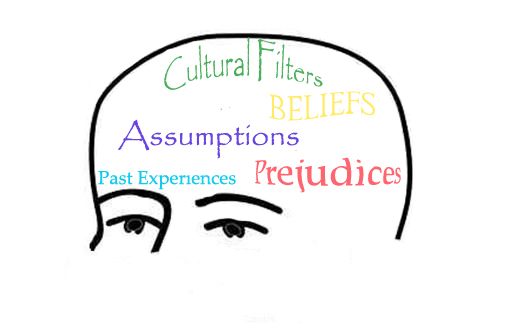
No matter who you are–black, white, Hispanic, French, Executive, Gen X, Retiree–the way you think is wrong.  Oh, I left out Democrat or Republican.  Our brains are truly wonderful things.  They are efficient processors of information.  There are a lot of tools that our brains us to make us more efficient and effective in our daily lives of being human.  I call all of these, generally, being on autopilot.  Being on autopilot is your enemy in terms of controlling your future.  Being on autopilot is also your friend in terms of making you more efficient at all the things you have to do in daily life.  The key is to learn the tricks your mind plays on you and to learn to turn these tools on and off to make better judgements when appropriate.

Let Me Be More Specific

Our brains use a number of tools or shortcuts that help us process information:

  • Halo Affect: assumption that because someone is good at doing one thing, s/he will be good at doing other things
  • Availability Heuristic:   assumption that because you think of something more frequently it is more likely to happen
  • Generalizations:  assumption that people, challenges, mistakes, organizations,  . . . pretty much everything . . . are just like the ones we have already experienced.  We tend to generalize trustworthiness, bad intentions, skills, incompetence, etc. based on other similarities.  Examples:  Asians are smart, Senior executives are bad, old people are degenerating,  Gen X’s are . . . (depending on your view).
  • Illusion of Understanding:  assumption that familiarity with something means you understand it
  • Hindsight bias: the tendency to view things as more predictable than they are
  • Motivated forgetting: re-remembering things to avoid blame
  • Overconfidence bias: the belief that your abilities are greater than they are–80% of drivers believe that they are in the top 30% of drivers
  • Recency bias:  giving more credibility to more recent data–the last presenter, the last candidate, the last answer
  • Clustering illusion:  seeing patterns where none exist

We All Do It

All of us use these tools.  They were developed back in the day when we lived in caves and hunted.  They are tools that help us make instant decisions without a lot of effort.  The problem is that they don’t work as well with today’s problems as when we were outrunning lions and tigers and bears.  The worst part about them is that we are generally unaware of them.  We value eyewitness testimony over other kinds of evidence, even though it is highly defective.  We choose candidates like us because we are generalizing and making assumptions at the subconscious level without really evaluating the basis for our assumptions.  We take risks based on shortcuts our brains make without even being aware of them.

What Can You Do?

The best thing to do is to educate yourself about these “tricks” that your mind plays.  There are several great books that can help:

Then Practice!

Learn to take control of the way you think by practicing.  Ask yourself, “Why do I think this?”  “How do I know this?”  “How can I think of this differently?”

4 Comments

Filed under Books, Career Development, Executive Development, Personal Change, Reframe