Do You Take Initiative?

iStock_000028528352XSmall

Duh.  I Know To Take The Initiative.

You’ve heard that you should take initiative. Duh. But do you do it? Do you suggest ideas? Do you seek to improve the situation? Do you take action? Do you do it when it isn’t expected? The FREE Dictionary defines “take the initiative” as “to activate oneself to do something even if one has not been asked to do it.” That last part is the important part–even if one hasn’t been asked to do it.  Do you do things without being asked to do them? Do you surprise the people you work with by taking on things and getting them done?  So many of us wait around to be told to do stuff.  Do you see things that need to be done, problems that need to be solved, and do you take them on and get them done?

Taking the initiative can make the difference between getting noticed and not.  It can get you attention from the right people in your organization.  Part of the reason for that is that it is such a surprise when people actually step out of their ‘wait to be told’ role and think for themselves and take action.  You may think I’m crazy.  You may think that people take the initiative all the time.  But think about the last time someone actually surprised you by doing something that needed to get done that wasn’t clearly in his/her responsibility.

People who are good at their job are good at what their job is–not beyond that.  People who take initiative are beyond good at their job.  They are on their way to being good at the next level job and the one beyond that.  They are thinking (and acting) like their boss.  Whoa, you may say.  My boss won’t like that.  I’ll step on his/her toes.  There is a difference between ‘doing’ your boss’ job and taking iniative.  When you take initiative, you help your boss rather than step on his/her toes.  You lift some of the load.  Remember–SURPRISE is the key.

So How Do You Take Initiative?

We are well trained to do what we are told.  We learned it at home.  It was enforced at school.  (I once did a survey of middle school teachers of how they identified students who were leaders.  Many of them said the leaders were the ones who followed directions, were quiet and did what they were told!)  We learned to succeed at our entry level jobs by learning and following the rules quickly and well.  Our bosses expect us to do the things that are in our job.  They don’t expect much else.  And so we learn.  We modulate our brains and actions to fit without our roles.  We wait to be told to act beyond the day to day-ness of our jobs.

The key to taking the initiative is the way you think about it.  Do you see a problem?  Instead of just seeing it and walking by it, think about what could be done about it.  Think about what YOU could do about it.  Then DO it.  It takes some bravery.  It’s like visiting a new city without a map.  Make creating that surprise your goal.

The first time I did it, I did it by accident.  I created a report of my observations about something just because I was  too full of my own opinions to keep quiet about it.  It didn’t occur to me that anything would happen except that someone might read my report.  Then I just couldn’t stop with the opinions and made some suggestions at the end of the report.  I didn’t see it as taking the initiative.  I saw it as finding a way of expressing my opinions and ideas that were trying to push their way out of me.  Apparently this spontaneous creation of opinion and suggestion (on a problem that had been driving people nuts for a while) from someone at my level was completely unexpected.  It got attention.  It got me called into a meeting with people at the top of the organization to be questioned about my ideas.  It got me assigned to the group to implement some of the ideas (that got funded beyond my imagination).  It started my career on its way.  I recently found a copy of the report I wrote so long ago.  It wasn’t particularly well written.  Today I would know how to ‘sell’ the ideas and I would have pre-sold them to people to make the organization more receptive.  My reaction when I found that report, however, was–that is when my career hit a pivot point.  When someone read that report, he was surprised.  Maybe the surprise itself made him pay attention to the content.  I can see now:  I took the initiative.  That accident taught me the benefit of taking the initiative.

So What Do You Do?

  • Proactively look at problems.
  • Think about what it would take to SOLVE them.
  • Think about what you could do to get the ball rolling.
  • DO IT.

Leave a comment

Filed under Bosses, Career Development, Goal Setting, Success

Do You Really Need A Mentor?

Do You Need A Mentor?

It’s common to hear that you need a mentor for career success.  Is that still true?  Yes. You need a mentor.  You need several.  Over the course of your career you need people who help you along the way.

  • Mentors are experienced and trusted advisers.
  • Mentors can explain things in a short conversation that would take weeks, months, or even years for you to figure out on your own.
  • Mentors can tell you things about yourself in a way that you can actually hear it.
  • Mentors can easily open doors that you might otherwise stand on the outside looking in–forever.
  • Mentors can teach you skills that you never knew you could develop.
  • Mentors can help you see the world from another (or lots of other) perspective.
  • Mentors can help raise your performance bar.
  • Mentors can help you come up with new solutions to problems that have you stuck.
  • Mentors can speed up your progress and development by sharing their experience (and saving you from having to go through the same experiences–especially the bad ones).
  • Mentors can help build your network.
  • Mentors can help you understand the unwritten rules of an organization.

YES.  You Need a Mentor.

So, yes, you need a mentor.  You need different mentors for different times in your career. You need mentors to help you with different developmental issues.  For example, when you are graduating from college, you need someone to guide you from the college experience to the work experience.  What should you expect?  How should you act?  What is important?  Of course lots of people make this transition without a mentor (although parents frequently fill this role), but people who have mentors who specifically focus on this conversation avoid common pitfalls.

When you start to get serious about having a career instead of a job, a mentor can help you begin to navigate organizational politics and understand what organizations look for in “high potentials.”  Young people who are a part of Executive Leadership Programs get a lot of this kind of mentoring and it makes a difference!  Which job should you go after next?  What should you focus on in the interview?  What should you highlight in your performance assessment?  What should you add to your resume draft?

When you decide to change organizations, which ones should you target?  Who does your mentor know in the new organization?  Which organization is likely to be the best path to your career goal?

When you’re trying to solve a difficult organizational problem–supply chain streamlining, new branding, cost reductions, new market target–a mentor with specific knowledge of that problem is a short cut to understanding the boundaries of the problem and where to find the kind of expertise that you need.

Just Do It.  Ask.

Mentors can perform many roles in your career success.  The key is to step out there and get one (and then another and another).  Mentoring is about relationships.  Ask someone.  Who do you ask?  Ask someone who knows what you need to know.  Ask someone who can introduce you to people or experiences that take you to a new level.  Chances are that anyone you ask would be flattered to be asked to be a mentor.  S/he may or may not be able to say yes, but it is likely that they would enjoy being asked.  If they say yes, know what it is that you’d like to get from them.  Tell them.  It’s ok.  That is what mentoring is about.  Straight talk.  Being clear.

If s/he says s/he can’t do it, then tell them why you thought they would be a good mentor and ask if they can suggest someone else.  Ask if they will provide an introduction or if you can use their name to approach the other person.  You wouldn’t think twice about going to a doctor who specializes in something you need.  Don’t think twice about seeking a mentor in the same way.

Remember, though, mentoring is about relationships.  What can you give back to your mentor?  Mentoring relationships are two-way relationships.  Mentors feel good when their mentees make progress.  They like it when they can introduce their mentee to a new experience, person or organization. There are lots of things that you can teach someone who might be your mentor.  Be sure to do it if it is appropriate.  Be open to the ways you can help/teach/entertain your mentor.

2 Comments

Filed under Career Development, Career Goals, Executive Development, Hi Po, Mentor, Networking, Unwritten Rules

If You’ve Been In Your Job 10 Years, Wake Up. Read This. In Fact, Read This Even If You Haven’t Been In Your Job 10 Years.

iStock_000005200058XSmall

You’re too expensive

If you’ve been in your job 10 years, you’re too expensive.  For the company.  I don’t mean that you personally aren’t worth the money you’re making.  I mean that you aren’t worth it to the company.  Think about it.  You were hired with (presumably) enough skills to do the job you’re doing.  You’ve gotten regular raises–again, presumably.  Your skills might have increased as well.  BUT YOU HAD ENOUGH SKILLS TO DO THE JOB WHEN YOU WERE HIRED.  So what is the added value for the company?  Whether they admit it or not (and it is mostly not), companies lay off employees who have been with the company for a long time in the same job.  Then they hire employees at entry level prices.  Companies may or may not hire younger people.  It really doesn’t matter.  They hire cheaper.

They put you out on the street. 

And what do you have to sell to your next employer?  That’s the key for both of these situations.  You need to figure out how to add value to the organization that is at least commensurate with your increased income, and you need to figure out how to add saleable skills to yourself so that when (and I don’t really believe it is ‘if ‘ for most of us) you are put out, you land on your feet in a better situation, and if you’re smart you see it coming and land first.

I’m a major believer in managing your own career and not relying on your company to do that for you.  You certainly may have a manager, or a series of managers, who really believe in developing people and creating situations that allow them to succeed in their career.  Count your self blessed, but year after year, your chances of keeping this kind of boss are slim.  YOU need to manage your career.  You need to put yourself into situations where you are continuing to grow and develop and move up the organization, so that when it comes time to put people out on the street it never occurs to anyone to come after you.

Think about it from the company’s perspective–what are you adding over and above what they hired you for that make you worth more to the company?

5 Comments

Filed under Career Development, Career Goals, Personal Change

Leaders Are Not Followers

I know.  I know.  There is a school of thought that leaders can/should be good followers.  I’m not saying that leaders can’t follow directions, or act appropriately within their hierarchy.  I don’t think leaders are followers.  I think leaders think for themselves.  Think. For. Themselves.

  • They challenge the status quo.
  • They think about what they would do if “it were my problem.”
  • They do not sit at the level in the organization and not speak up when something needs to be said.Leaders Aren't Followers
  • They step up.
  • They take responsibility.
  • They take risks.
  • They fail.
  • They pick themselves up and do it again.
  • And they teach their followers to do the same.

Leadership is about how you handle yourself. It is about how you think.  It is about how you act.  If you do these things, people will follow you–even if they are leaders too.

Leave a comment

Filed under Career Goals, Leadership, Success

Time Is Critical To Your Success

whatever clock

I think about time a lot.  I’m fascinated by time.  My perspective on time is that it is unlimited.  I know that isn’t true.  In fact, I have lots of great reasons to know that that isn’t true.  I still have that perspective, though.  That means that I am comfortable procrastinating–there is always time.  I can do it next week, or next month, or even next year.  I know lots of people who are urgent about time.  Who MUST get stuff done–especially the stuff on their list–get it done now.  People who are impatient about time drive me nuts.  And I drive them nuts.  They are right.  And I am right.

If you live your life thinking you’ve got all the time in the world to accomplish what you want, then you will be unpleasantly surprised at some point to find out that you have run out of time.  If, on the other hand, you spend your life all uptight about time and fret about getting everything done NOW, then you will likely get lots done, but you will also waste an awful lot of time stressed out.  And you will miss some of the true joy in life.

I’ve made the point in a previous blog, You Have All the Time There Is.  We all have the same amount of time that all the “Greats” in our world have had–Galileo, Mozart, Jefferson, Einstein, etc.  It’s what you do with time that makes the difference.  I’m not an expert on these folks, but I don’t think ALL of them stressed out about time (although maybe some of them did).  They did use their time wisely and to our benefit, though.

So many people make a lot of money helping us manage our time.  There sure are a lot of us who apparently don’t manage time as well as we could.  Or at least who are willing to pay a lot of $$ to do it better.

Ask yourself:

  • Are you accomplishing what you want with your life?
  • Are you managing time to your satisfaction?
  • What do you want to have accomplished this month?  This year?
  • What one thing could you do differently to manage time better?
  • What commitment could you make to make that change?

Leave a comment

Filed under Time Management

Do You Ever Think About Your Legacy?

 iStock_000002989831XSmall


This has been a tough week.  A dear friend’s husband had a stroke.  A young acquaintance died.  A friend lost a job.  Another friend had a baby girl. The juxtaposition of all these events has made me think of  mortality and therefore, my legacy.  What will people remember about me?  What difference will I make in the world?  Whether today is my last day or I have 50 more years, what impact will I have on my world?

Steven Covey, in his best seller, 7 Habits of Highly Effective People, made one of the habits “Begin with the end in mind.”  Obviously, it is hard for us to begin with our legacy in mind.  As children, we can’t grasp the concept of a legacy.  We feel immortal and think in the present.  As children we aren’t able to grasp how we can/will have an impact.  We live our lives, usually as best we can, and we get smarter.  At some point, we suddenly realize that our existence in this world can change the world and that we can influence that.  That’s the really cool part.  We can influence it.

Have you thought about it?  I probably first thought about it when I attended a Leadership Development program in my late twenties.  I was about the same age as the young acquaintance who died this week.  They had us write an obituary.  Begin with the end in mind.  When you read obituaries, you get a snapshot of people’s  lives–what was important to them–

  • their families
  • their military record
  • their accomplishments
  • their publications
  • their interests

(For one of the most interesting obituaries, read this one.)

Obituaries take it down to the most important things in your life.  So for you, what is that?  Are you focused on the things that are most important to you?  Is that how you spend your time?  Or do you spend your time on what other people think is important?

When you encounter life events like I have this week–a death of a young person, a friend with a stroke, a birth of a baby–it helps to re-focus you on what is important.

The most important things to me are:

  • my family
  • my work
  • my students and clients
  • learning

What about you?  What will people say about you?  What are you focused on?  What are you ‘wasting’ your time on?  Are you proud of what you have accomplished so far?  What else do you want to accomplish?  What are you going to do about it?  You have the ability to influence it.  Today.  Tomorrow.  As many tomorrows as you have.

Enjoy.

2 Comments

Filed under Goal Setting, Personal Change, Reframe

I Am Heartbroken

black ribbon

This About Trayvon Martin

And this is about all of us.  I am a white woman.  To some that automatically disqualifies me to feel what I feel about the verdict in the trial about Trayvon Martin’s death.  I am angry.  I am heartbroken.  But I am also hopeful.

I Am Angry.

I am the mother of two African-American sons.  What happened to Trayvon Martin could have happened to them.  Yes, as their mother, I warned them.  Don’t run from police–it doesn’t matter what it is about–don’t run.  Be respectful of police–yes, even if they are not in the right.  Keep your hands empty and in sight. Don’t speed in certain neighborhoods.  Pay attention.  Be careful.  PLEASE.  Be careful.  I sent them out into the world and I worried.  And there were instances.  Both of them were accused of things that there was no way they did–they were just walking or driving by.  There are people who don’t believe that this happens.  White people.  It is true–if you are black, especially if you are male, you are guilty until proven innocent.  Trayvon was searched in association with his suspension from school and the policeman found a screwdriver .  The school investigator described this screwdriver as a burglary tool.  If your white child had a screwdriver do you really believe for a second that that would have been the automatic assumption?

This decision sends the message that it is ok to shoot a black child if you claim self-defense.  Even if you take actions that bring on the circumstances.  Even if you have a history of being abusive and racist.  As the mother of African-American sons, I find that intolerable.  As a citizen of this country I find this unconscionable. I am angry.

I Am Heartbroken.

I cannot imagine handling myself with the strength and grace that Trayvon Martin’s parents have.  I can’t imagine telling people to respect the jury’s decision.  I can’t imagine.  Their child walked to the store from a “safe” neighborhood and was confronted and KILLED on the way back home. On his way back home.  To safety.  He was suspected of being up to no good.  Because he was young.  Because he was black.  I think of their loss and I am heartbroken.

But I Am Also Hopeful.

The reactions that I have seen have been angry and enraged and heartbroken and desperately depressed.  I also see, however, a quiet powerful strength emerging.  I see a broad determination to speak out, to not tolerate this situation any longer.  I see people being introspective and outspoken and tough.  This isn’t about violence.  This is about making a change.  This morning I hear the most articulate discussions I’ve ever heard about implicit racism (the polite word is bias, but the real word is racism) that I’ve ever heard in public media.  We ALL have to understand how our thoughts guide our behavior, decisions and attitudes–and we aren’t even aware of those thoughts.   They happen in the flash of a second.  They happen at the speed of an electrical impulse.  EVERYONE has them.  People feel fear at the sight of a black man.  People feel fear at an interaction with a white person.  Yeah, go ahead and deny it.  Research–lots of it–says otherwise.

This has gotten better with each generation.  It is time, however, to fix it.  To stop it.  This is another Rosa Parks moment.  Our Trayvon Martin moment must be to take control of our own prejudices and wrestle them away.  We must protect the members of our African-American community, especially our boys.  We MUST.

2 Comments

Filed under Diversity, racism, Trayvon Martin

Do You Need More Education To Grow Your Career?

Do You Need Education?How Do You Decide?

I recently have had a couple of folks let me know that they have completed the next level of their education.  One of them reminded me that I had responded to his “I’ll be x years old when I finish my PhD” by saying “You’ll be x years old anyway, you might as well have a PhD when that happens.”  That sounds like something I’d say.  And I stand by that.  I don’t believe that you’re ever too old to get more education, and I think education by itself is extremely valuable.  Given that, though, with the price of education today and the sacrifice it takes—away from family and aspects of work—I think it is worth asking whether or not you need more education to accelerate your career.

Let’s Start With What Are Your Career Goals

What do you want to do with your career?  What are your career goals?  What industry, company, level, function, job?  In what time frame?  I know, I know—you don’t know.  You don’t have to know precisely—you need to know generally.

  1.  What industry?

Industry is important.  Do you want to be in the same industry that you’re in now?  Do you want to be in a different industry?  Does your industry require a certain level of education for you to be credible?

If you industry requires a level of education to get to your career goal, or if you want to move into an industry that requires education then, YES, you need more education.

  1. What company?

What is the standard in your company?  Look at the Executives.  Do they all have advanced degrees?  Do most of them?  Are there classes of those with degrees—those who’ve been around for a long time don’t have degrees and those who are newer do have degrees.  When they recruit, what are they looking for?  (It’s important to do this analysis on a pretty regular basis and look at everything the company is recruiting for, not just education).  If your company has a record of promoting from within, and those who get promoted don’t necessarily have advanced degrees, then NO, you probably don’t need more education.

There are many ways to get your ticket punched.  Quite frankly, getting education is the easiest.  Degrees come with the assumption that you know what you need to do.  You can certainly know what you need to know without formal education.  It is just harder to prove to decision makers (including those who hold your career in their hands) that you know what you need to know without that degree or certification.  In fact, I am self-taught in my primary area of expertise—organizational change management and organizational effectiveness.  People who decide to hire me are generally looking for a degree in this area for confirmation of my abilities.  I have to show them experience and writing and references to overcome my deficiency of related formal education.  I’ve always managed to do it.


  1. What function?


Within companies and industries there are different education expectations within different functions.  Finance people may be expected to have an advanced degree in Finance or an MBA or be a CPA, while technical resources may be expected to have a first degree in computer technology, but experience or certifications in certain systems or languages are much more important than additional degrees.  On the other hand, portfolios may be more important than education or certifications for graphic artists.

The standard within the function within the company can help you decide whether you need more education.

*******Remember, however, that career portability is always a consideration.  Does the company you are using to make user decision follow the standards for the industry? *********

  1. What level?


What level do you want to reach?  CEO?  A recent U.S. News analysis of Fortune 500 CEOs indicated that of the 500 CEOs,  35 didn’t graduate from college.  Two hundred had M.B.A.’s and about 140 had other graduate degrees. So . . . do you have to have a degree to be a CEO?  Probably YES, you need an undergraduate degree, probably NO, you don’t need a graduate degree.  But then, it depends on the other factors—industry, company, experience, getting your ticket punched.

People could argue that some of the best CEOs (and then they could argue about ‘best’ too) of our times—Mark Zuckerberg, Bill Gates, Steve Jobs, Richard Branson, Barry Diller—didn’t have undergraduate degrees—why do you need one.  You don’t.  Do you have a killer idea and the energy, stamina and luck to drive it to market and beyond?  If you don’t have a killer idea, then what skills do you have and how do you provide that you have them to the computers and people who are screening your resume and track record.  Do you get results (and can prove it)?  Then you are less likely to have to have additional education.

What about to be a mid-level manager or entry-level Executive?  An MBA or other business degree helps.  It helps because it provides you with an overview, with some depth, on how you run a business and how you get an organization to deliver results.  To be a mid-level manager or entry-level Executive, YES, probably you do need a formal education. (Again, it depends on the industry, company, function . . . but it does help get your foot in the door and provides you credibility that you know what you’re doing.)


  1. What job?


Obviously, if you want to be a medical doctor, you need a lot of formal education.  If you want to be a hospital administrator, it probably it isn’t a requirement.  If you work at an organization that requires all Executives to have degrees, then you do.

Even If You Don’t HAVE to Get a Degree/Certification, Should You?


Again, it depends:

  • How important is a Degree/Certification/More Education to YOU?


Many of us were raised to think that people with an education were “better.”  Our families valued degrees, and we were taught to have that as a goal.  Many of us think that we need a degree to be more valuable.  If this is a big deal—even if you went through the analysis above about whether your career goals require more education—you should consider getting that education.  Self-respect and pride are important for personal happiness and career success.


  • Do You Find Learning Fun?  Do You Do That More Easily In A More Formal Setting?


If you can afford it, and have the time, then by all means—get more education.  It can’t hurt (except in some cases, a PhD—I’ve seen hiring managers not hire PhDs because they thought they were too academic).

Can You Afford It?

Start with a ROI analysis.  What will it cost?  What will the return be?  It’s perfectly ok to  put intrinsic returns in—that’s what you’re evaluating when you decide to buy a big boat or a vacation home—but you do have to weigh the costs too.  The dollars spent for the education v. the dollars spent for a better school (which might help with being a more credible candidate for career acceleration –65 (13%) of Fortune 500 CEOs have degrees from Harvard) v time spent away from family v likely increase in income over your lifetime v how much better you’ll feel about yourself.  Just don’t do this assuming that it will automatically pay off in all the ways you think.  Investigate this carefully.


Leave a comment

Filed under Career Development, Career Goals, Executive Development, Goal Setting, Learning, Success

Fat People Aren’t Good Workers.

I don’t really believe that fat people aren’t good workers.  In fact, I am a fat people (or at least I used to be) and I happen to think that I am a good worker.  There are a lot of people who do believe this, though.  I believe that this is just fuzzy thinking.

fat people are discriminated against

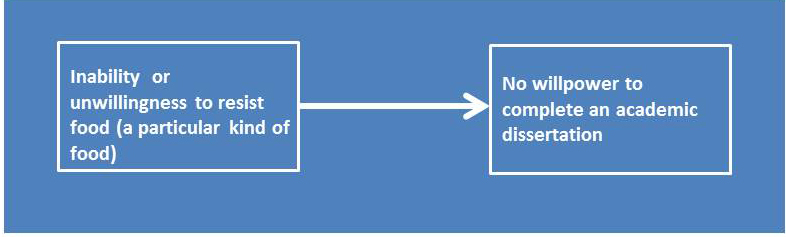
A lecturer at NYU recently tweeted “Dear obese PhD applicants: If you don’t have the willpower to stop eating carbs, you won’t have the willpower to do a dissertation. #truth.”  More fuzzy thinking:

fuzzy thinking re obesity

What does will power re: food have to do with willpower over anything else?  Why don’t people who don’t have willpower re: other things–alcohol, sex, spending, gambling, exercise, hoarding–fall into this guys criticism.  This guy is an evolutionary psychologist–a scientist–who should have more discipline in his thinking.

He’s not the only one.  Recruiters (I once had a recruiter proudly tell me that he made overweight candidates walk up four flights of steps to interviews and if they couldn’t do it, they didn’t get to the next level.  Why?  Is walking up stairs a job requirement?  If he doesn’t do that for normal weight people, then how does he know that they can (if it is a requirement of getting to the next level?), hiring managers, supervisors, co-workers, sales people, customers all make decisions about people based on their weight.  Is it relevant?  Sometimes.  More often not.

Prejudice against fat people is an acceptable prejudice.  It is close to the last acceptable prejudice.  If you find yourself being prejudice against overweight people, challenge your thinking.  Examine what you believe about fat people, thought by thought by thought.  Do they really support one another?

fat lazy fuzzy thinkingDo you just not like fat people?  Do you just think that fat people should do better/be better/act better?  Is this a big enough deal that they should not get a job or a promotion?  Do you believe that being fat is an indicator of someone’s character?  There is a recent study that shows that children as young as four are prejudiced.

OK, So I Think This Discrimination Is Wrong

But it is not illegal.  It is hard to prove (and a lot of people think it is justified).  So . . . if you are overweight, this is something that you can actually do to affect your employability and promotability.  It might have as much of an impact (or more) as getting more education, or more experience, or even more networking.

1 Comment

Filed under Diversity, Job Hunt, New Job, Personal Change

My Boss Is Young Enough To Be My Child!

Mental Model of Boss

Younger Bosses

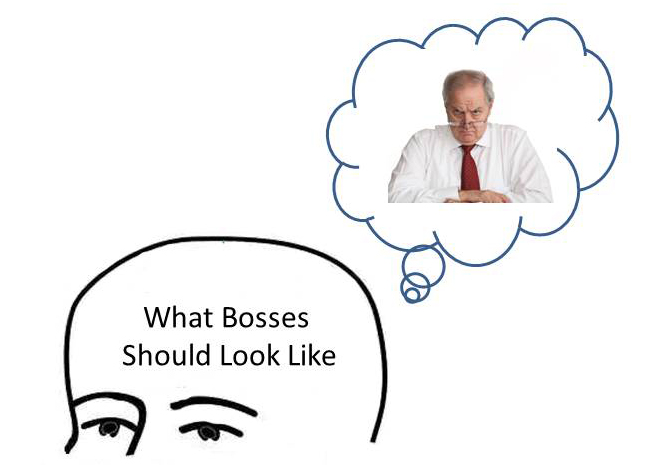
It happens to all of us–no matter how successful we are–if you stay in the workforce long enough, you’re going to have a boss younger than you.  Why does this matter?  Why do you care?  Yeah, yeah, it shouldn’t, but to most of us it does.  I’ll go back to harping about mental models.  We have a mental model of what a boss is and that we need to look up to a boss and someone who is younger doesn’t deserve that.  So why does our mental model require that our boss be older than us?  Back in the day, when people entered the organization immediately after high school or college and then moved up the organization step by step, the bosses were 55-65 year old men who retired and made room for the next person  (Oh, by the way, back in those same days, women only had some non-boss roles –I very specifically remember when people (both men and women) had the same issues with women bosses–bosses were NOT supposed to be women!!).  I know there are lots of people who don’t remember those days.  Most of the people, though, who are struggling with younger bosses now do remember those days.  In fact they are mostly from those days.  Things are different now.  It’s time to change our mental models.

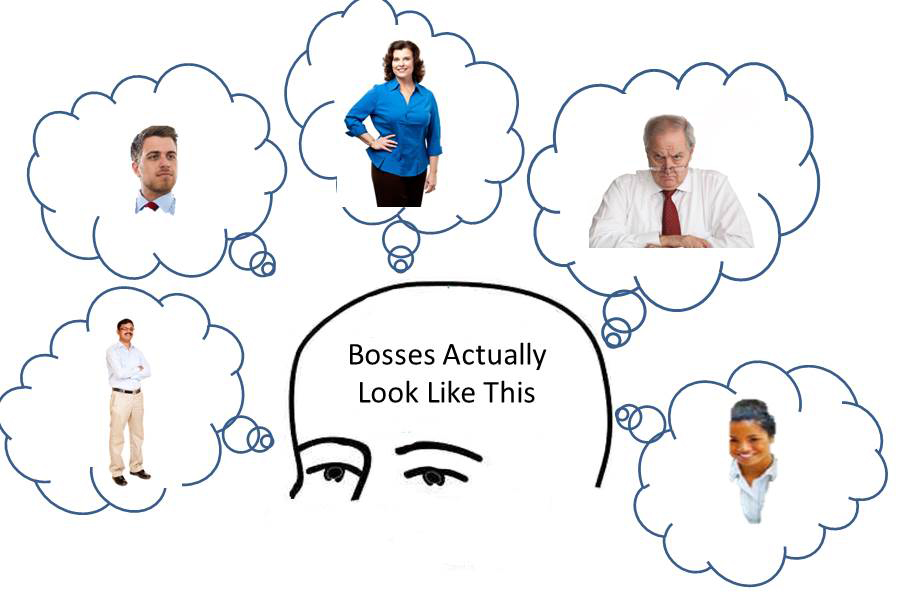
I certainly had the experience of working for bosses who were older than me who were not as smart, or knowledgeable or skilled at their job as me (I’m sure it was no one who reads this blog, though:-)).  Age didn’t have anything to do with this.  Neither did race or gender or even educational backgrounds.  You aren’t guaranteed good bosses.  Given that, though, good bosses come in all shapes, sizes, ages, genders and educational backgrounds.  There are people who are younger than you who have more knowledge than you about somethings.  There are people who have less education, less experience, or talent who can be good bosses for you.  Good bosses bring what the job and the team need AT THE TIME.  So change your mental model.  Start thinking about what you need in a boss and stop assuming that someone younger than you can’t bring it.  I know twenty-somethings who are better people managers than most of the middle managers that I know.  I know fifty-somethings who can explain technology better than tech professors.  One of the very best Executives I ever knew only had a high school education, but he sure knew how to gather information and make a quick and effective decision.  He had an instinct that I’ve never seen in anyone before or since.  I had a female boss, back in the days when that was rare, who focused so completely on the customer that she changed the culture (and the profits) of the organization.  She did it before it was “THE THING TO DO.”

Mental Model Actual Bosses

My point is that you’ve GOT to stop thinking about bosses as if they should be a certain gender, race, education or age.  Ask yourself what your boss brings to the table.  What does s/he bring that you don’t have?  How and what can you learn from him?  How can you improve the chemistry/relationship with her?  How can you earn his respect?  Unless you are knocking at retirement’s door, this is not the last boss you will have.  Bosses will come in more different versions as our world changes.  Get used to it.  Get good at it.  Especially if you want to be the boss.

1 Comment

Filed under Bosses, Career Development, Career Goals, Communication, Diversity, Inclusion