Tag Archives: career goals

Career Check-up

Why a Career Check-up?

Those of us who do what we should have annual physical check-ups.  People who practice preventative health care are much healthier.  We take our cars for their regularly scheduled maintenance milestones.  Our cars last longer, drive better and have higher resale values.  Regular house maintenance (how many of us have given our houses great makeovers when we’re selling them?) leads to fewer crises and higher sales prices.  But how many of us do that with our careers?  Most of us get an annual review for our job, but what about our careers? A job is a role that you play, specific functions you perform.  A career is a professional or work life, a broader view, transportable, beyond your current employer, beyong your current job.  Transportable.  In today’s economy, transportable is priceless.

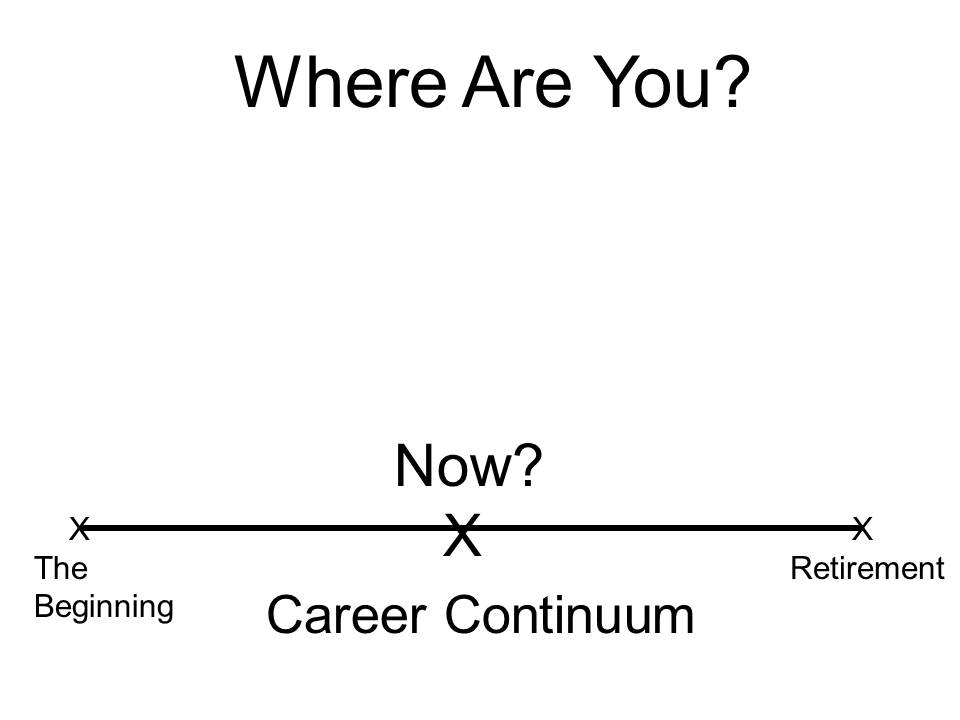
Career Continuum
Career Path

Where are you on the your career continuum?  Where on you compared to where you want to be?  In terms of time–how long have you worked?  How much longer will  you work?  Are you 1/3 done?  Are you 1/2 done?  Between now and what is left, what do you want to accomplish?   As you look at where you are, what do you need to move your career along as fast as you need to in order to get to where you want?

Career Trajectory
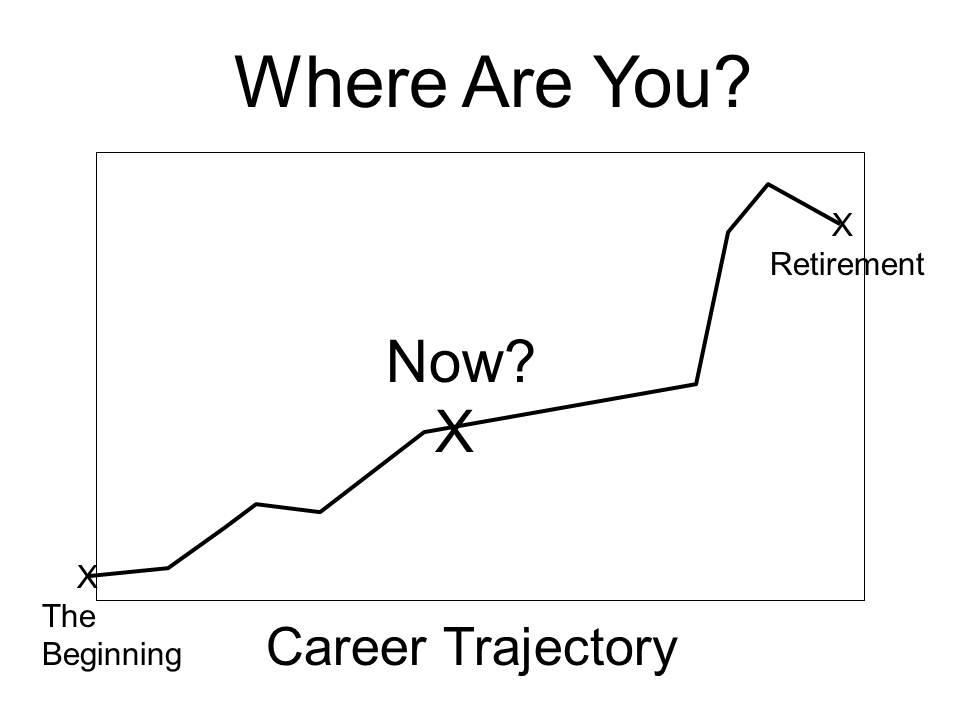
Now look at where you are in terms of what level you want to be?  If you are a Director now, do you want to be C-level?  Do you want to have your own business?  Do you want to move into another field?  Do you want to accelerate how much money you’re making?  Are you moving as fast as you want to? Are you being considered for the types of positions you should be to get to the level you want?

What’s Going On Now?

Look at what’s going on at your current organization WITH CLEAR EYES:

  • Are You Valued?
  • Do You Think Your Company Has the Right  Direction?
  • Do You Trust Your Organization’s Leadership?
  • Are There Growth Opportunities?
  • Is There Enough Challenge?
  • Is This Work What You Thought It Would Be?
  • Do You Fit in the Culture?
  • Is This Meaningful for You?
  • Are You Motivated at Work?
  • Do You Make Enough Money?
  • Is This the Right Work-Life Balance for You?

Depending on the answers, you need to decide whether your current organization is the right place for you to accelerate your trajectory pace.  If not, face it now.  That doesn’t mean you need to move now–it means that you need to get ready to move.  (It took me six years to get ready for my next step beyond an organization I truly loved–but once I saw that I needed to go, my focus changed to the next step rather than continuing to stay in an organization that couldn’t deliver my end-state for me).

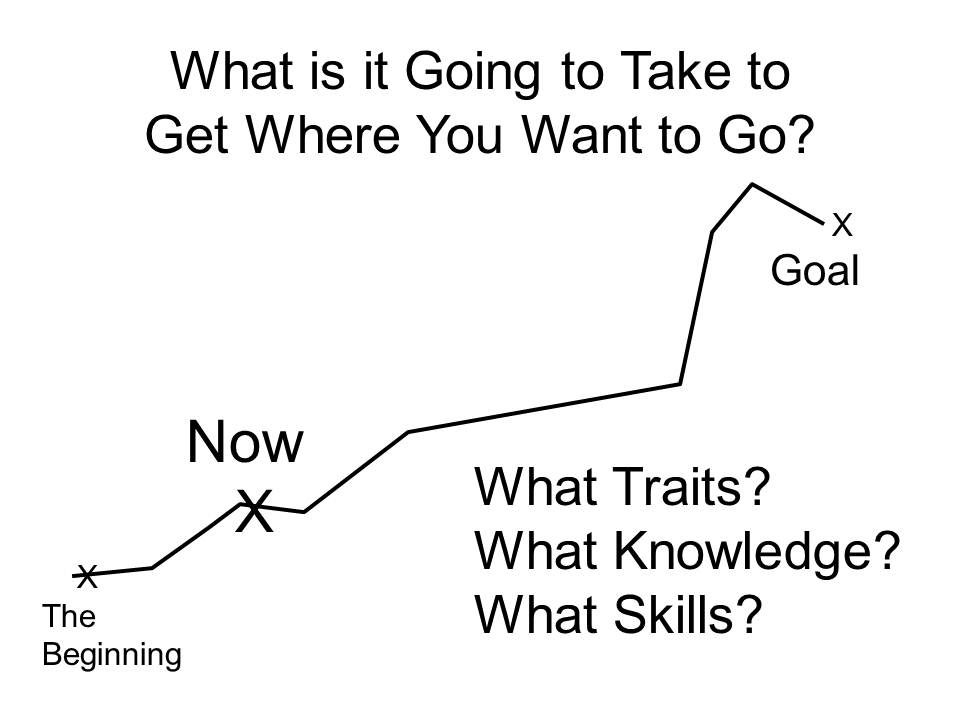
Start Working on What it Will Take
Skills Traits Knowledge

The more specific you can be in understanding what you need to know, do and be in order to reach your goal, the better you can prepare to do it.  If, for example, you are a Director and you want to be C-level, you may need to be much more financially literate than you are now.  You may have to be able to see the big picture better and pull yourself out of your detail focus.  If you are a Project Manger and you want to be a Program Manager, you may need to know how to understand enterprise-level governance of projects and programs.

How Do You Figure This Out?

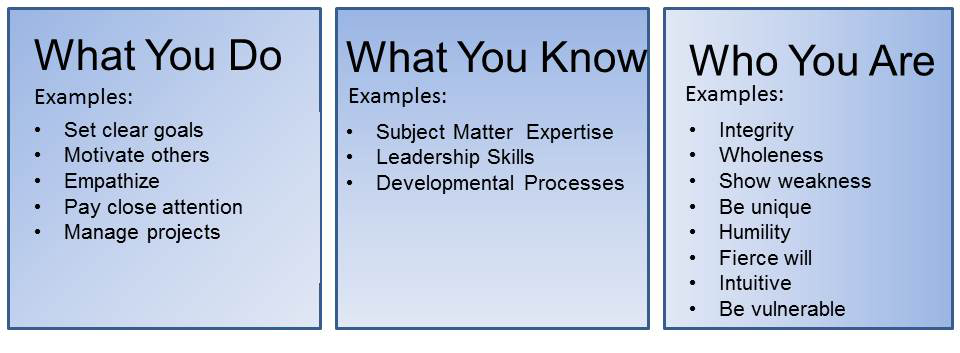
Look at People Who Do What You Want to Do:

  • What Do They KNOW?
  • What Can They Do?
  • What Are They Like?
  • What is Their “Brand?”

I can rarely persuade people to actually do informational interviews until they are looking for jobs, and usually even then, they are out of a job before they’ll do it.  It is an incredibly helpful tool for a career check-up.  It helps you to understand what it takes to get to the level you want when you talk to people who’ve done it.

  • What do they wish they had known when they were at your level?
  • What is the most important skill at their level?
  • What was hardest to learn/do?
  • What would they do differently?
  • What advice do they have for you?

You walk away with a perspective on what you need to know/do/be.  You are also likely to walk away with an advocate who may start looking out for you.

Create a Project Plan

You know how to do this:

  • Set your goals
  • Identify your critical path tasks
  • Identify the resources
  • Set your timeline
  • Do a kick-off
  • Git-ur-done!

Leave a comment

Filed under Brand Yourself, Career Development, Career Goals, Executive Development, Goal Setting, Personal Change, Success

Do a Personal SWOT

Career Strengths Weaknesses Opportunities Threats

Most of us have done a SWOT (Strengths, Weaknesses, Opportunities, Threats) for our organization at one time or another.  It is a part of most strategy development efforts.   Try doing a personal SWOT as a part of your career development plan.  It is an excellent, and pretty quick, way to look at where you are and what is in your way of getting to where you want to be.

Strengths–Guiding Questions

  • What makes you unique in the world of work and your  personal life.
  • What have you been trained to do?
  • What unique skills have you developed throughout your career?
  • What are your significant accomplishments?
  • What are you most proud of in your career?
  • What difficult challenges have you overcome?
  • What would your bosses say about your successes throughout  your career?
  • What makes you different?

Weaknesses–Guiding Questions

  • What have you heard (and maybe ignored) on performance reviews.
  • What skills do you need to develop?
  • Do you have the requisite education for where you want to be?
  • Who do you not know in the organization power structure?
  • Are your skills out of date?
  • Do you have a robust network?
  • Are you seen as an up-and-comer?
  • Are you motivated?
  • Remember, your strengths are frequently your weakness

Opportunities–Guiding Questions

  • What have you always wanted to do?
  • Look at  career goals since childhood, extracurricular activities,hobbies, beyond-work-activities, areas of interest, learning.
  • What trends/patterns do you see in these that offer ideas for your future?
  • If you could re-invent yourself, who/what would you be?
  • What are your interests that could be made into a career path?
  •  Can you do some damage control where you are?
  • What would it take to motivate you?
  •  Can you turn what you do into a career that crosses into other industries ?
  • Are there other industries that interest you?

Threats–Guiding Questions

  • Have you overstayed your welcome?
  • What is the financial stability of your organization?
  • Are there downsizings, leader changes, mergers on the horizon?
  • Are you getting along with your boss? Your boss’ boss?
  • Are you getting along with your peers?
  • Are you getting the “plum” assignments?
  • Have you felt a “shift” in relationships lately?
  • Do you FIT in the organization?
So, What Do You Do?

Pick anything.  Work on leveraging your strengths.  Work on eliminating or reducing or “plan b-ing” your threats.  Take advantage of your opportunities.  Work on improving your weaknesses.  Just start.

Leave a comment

Filed under Career Development, Career Goals, Executive Development

Get Off Your Butt! DIY Executive Development

I’m going to rant a little

l talk to people all the time who are sitting around waiting for their company to “do something” about their development.  They know that they are talented (and for the most part, the company agrees), they know that they are “hi po” (high potential–recognized by the company as having potential to move up), and they know that they do a good job.  So, why doesn’t the company send them to Executive Development programs, or provide them with developmental opportunities, or generally take an interest and develop them?

There are all kinds of reasons

Maybe the company doesn’t have a well-developed Executive Development system.  Maybe the company doesn’t classify these people as “hi po” enough.  (Lots of companies, maybe most companies, take the view that only the most “hi po” gets developed).  When I ran an Executive Development Program for a company, I found that the “hi po”s who were selected by the ‘deciders’ were all over the place.  Potential is in the eye of the beholder.  You may not fit the profile for hi potential for the person in YOUR management chain who makes the decision.  The company may be trying to develop a certain skill (like innovation) at this time and are picking people who they think have the most potential in that area.  Someone up there may not like you.  There are all kinds of reasons why it is not you, not this year, not at this company.

So What?

So why am I going to rant?  Because I think it’s totally nuts for ANYONE to sit around and wait for your company to develop YOU.  Who cares more about your career and your abilities more than you?  Who wants you to succeed  than you?  How long will you stay at THIS company?  They will develop you for their organizational profile and needs.  Will that make you a fully rounded Executive candidate? Maybe, but probably not.  What one organization believes are the key attributes of leadership is another organization’s rejection list.

Get Off Your Butt and Develop You

Most well run organizations have well thought out Executive Development plans and programs (just because it doesn’t focus on you doesn’t mean that there isn’t a plan).  These programs look at what the organization needs, what it has, and puts in place a plan to hire or develop the necessary skills to take the organization to the next level.  You can do the same thing, with you, and only you, as the hi po being developed.  (this applies to you hi pos who are already “being developed” by your organization—make if faster, or develop skills that are outside the organization’s focus that you know you need).  If you do this right, it could have more impact than an MBA (although it is possible that an MBA is a necessary part of your personal development plan).

After years of helping organizations develop Executive Development programs and of coaching all kinds of individuals, I’ve come up with an outline of what needs to be addressed in Do-It-Yourself Executive Development.

DIY Executive Development

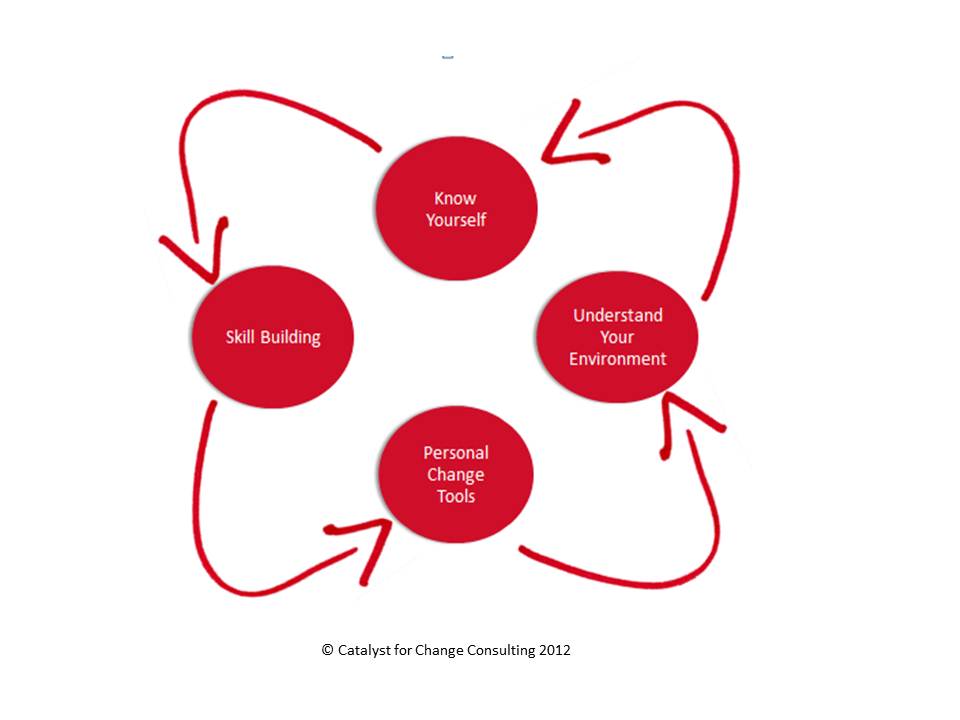
Do-It-Yourself Executive Development

I know the print on the diagram is too small to read, but I wanted you to see how it all fit together.  There are four areas of developmental concentration:  1) Know Yourself, 2) Understand Your Environment, 3) Personal Change Tools and 4) Skill Building.   You can start anywhere—they all support each other.

4 Essentials for Do-It-Yourself Executive Development

The Recipe for DIY Executive Development:

Know Yourself–Understand Your:

  • Motivation
  • Habits
  • Personality
  • Beliefs About How Things Work
  • Strengths/Weaknesses
  • Temperament
  • Flaws (aka Derailers)

Understand Your Environment:

  • What is the Culture?
  • What is Your Fit in that Culture?
  • What is the Power Structure?
  • What Gets Rewarded?
  • What is the Organization Life Cycle Stage?

Personal Change Tools–Understand:

  • Reframing
  • Habits
  • Feedback

Skill Building–Develop:

  • Execution Skills
  • Leadership
  • Financial Acumen
  • Organization Assessment
  • Organizational Political Saavy
  • Personal Brand Management
  • Emotional Intelligence
  • Organizational Change Management

The well-rounded, and highly successful Executive has all of these.  No one is born with all of them; they need to be developed.  If you want to be a successful Executive, stop waiting for your organization to do it.  Get off your butt and start working on developing yourself.  You’ll do a much better job than any organization if you focus on it.

Leave a comment

Filed under Brand Yourself, Career Development, Career Goals, Derailment, Executive Development, Hi Po, Leadership, Personal Change, Recession Proof, Reframe, Success

Can You Really Earn a Living Doing What You Love?

Do What You Love The Money Will FollowDo What You Love, The Money Will Follow

You hear it all the time.  “Do what you love and the money will follow?” But is it true?  I’d have to say, “Kind of.”  When you are working doing things you love, then it really isn’t work.  It all flows.  You forget what time it is.  You have all the energy you need.  The problems are interesting instead of overwhelming.  At the same time, there are lots of things that people love to do that aren’t easy to earn a living doing.  Golf.  Reading.  Collecting.  Gardening.  Eating.

If you’re like me, as you read the above list, you can think of ways to make a living doing those things.  If you extend these things beyond to related things, there are even  more ways to make a living from them. Lots of ways.  The thing is that we want to make LOTS of money doing things we love.  We want to just do what we love and have a business magically sprout around us.  It doesn’t work that way.  So, if you’re thinking about it that way, then, no, you can’t.

You Have to Work to Do What You Love

It still takes work to do what you love and earn a living from it.  Take me, for instance.  I do what I love.  I coach people to achieve their dreams.  I consult with companies to improve their performance.  I LOVE doing these things.  BUT . . .  I also have to do marketing, proposals, hustle for business.  I don’t particularly enjoy those things.  They are necessary in order for me to be able to do the things that I love.  And because they enable the things that I love, they aren’t as bad as they would be otherwise.

I had to do a lot of work to be able to know how to do the things that I love.  I had to learn, practice and deliver while working for companies–a.k.a. jobs.  I worked at jobs like all the other people who supposedly are earning a living not doing what they love.  A major difference was that I was learning in order to do what I wanted.  I thought of it that way.  That made it easier.  I was working toward doing what I loved.  And because it was going to enable the things that I loved, it wasn’t as bad as it would be otherwise.  Knowing that I was working toward doing what I loved gave me a lot of energy to keep doing it.

Figure Out What You Love

Maybe the hardest thing is to figure out what you love, and then to figure out how to make a living doing it.  If you love quilting, for instance, you can quilt (to earn a living doing this, you either have to make very good quilts that people will pay a lot for, or you need to make lots of quilts (get a quilting machine)).  Or you could have a online quilting auction service.  Or you could have a business that sells quilting tools or supplies.  Or you could design fabric.  Or you could write about quilts.  Or you could take quilt pictures.  Or you could develop  and deliver quilt training.   Or . . . you get the point.

You can love working for a company.  Lots of people do.  You don’t necessarily love working for all companies, but working for some can prepare you to work for the one you love.  It may be a certain kind of company that you love–a restaurant or a trading company– or it may be a particular role in a company that you love.  Whatever works for you.

The way I figured out what I loved was to evaluate all the parts of the jobs that I had really enjoyed–in my case, teaching, figuring out how to fix parts of organizations, presenting, advising–and to figure out what “job” that was.  I had never thought of being a consultant until I went through this process. Once I figured it out, though, the rest was easy.  What skills did I need to be able to do it?  How could I learn them? What was my timeframe?

Not Magic, But Worth It

There was nothing magic about it.  Money didn’t instantly appear.  I had so much fun, though, that it didn’t really matter.  The problems were interesting, not insurmountable.  Doing what I loved helped me pick myself up after setbacks and keep going.  The more I learned, the more fun I was having.

So, yes, you can earn a living doing what you love.  You just have to work at it.

Leave a comment

Filed under Career Development, Career Goals, Executive Development, Goal Setting, Personal Change, Success

It’s the End of First Quarter. How Are Your Resolutions?

Most of Us Make Resolutions

The website, The Statistical Brain, says that 45% of us make New Year’s Resolutions and 8% of us succeed with them.  Thirty nine percent of folks in their twenties succeed, compared to fourteen percent of folks over age fifty.  (Now what is that about?)  The bottom line, lots of us make resolutions and few of us manage to succeed at them.  I’m not going to go into all the reasons this is true, but I will give you some tips on how to keep working on them (if you still are), or how to start again if you’ve already given up.

New Years Resolutions

Pick One

Look at your resolutions.  If you have more than one, pick the MOST important one.  If you only did one this year, which should it be?  If you’re anything like me, then many of your resolutions are inter-related.  That’s ok–one is still more important, or more foundational than the rest.   Now, in order to accomplish that resolution, what is the first step?  The VERY first step?  When are you going to do that?  Be specific.  VERY specific.

Write It Down

Use a journal.  Write down the goal.  Write down the steps.  Write down the dates.  Now, write down what it’s going to be like when you have accomplished it.  Specifically.  VERY specifically.  How will you feel?  Who will be happy?  How will things be better?  When will you be able to start on your next resolution because you finished the first one?  Write it all again.  And again.  Write it till it isn’t writing about the future, but it feels like the present.  Write it till you are so familiar with it that it feels uncomfortable because what you’re writing hasn’t happened yet. Write it.  Write it. Write it.  Write it every day.

Change

In his new book, The Power of Habit, Charles Duhigg says that about two-thirds of our behaviors are based on habit.  Our morning routine, our drive to work, our morning email, internet usage, our interactions with our co-workers, and on and on and on.  There is a good reason for this.  It is how our brain economizes–it routinizes what it knows and can then use the brain power on other things.  I do my best thinking when I’m driving.  Just think–if I had to pay as much attention to driving as I did when I was sixteen–what tremendous thinking would be lost:-)  The bad news is that in order to acquire a new habit (and succeed with a resolution), you have to overwrite the old habit, one that the brain has efficiently and effectively turned into rote behavior.

In order to create a new habit, you need a cue–a signal to your subconscious that you’re about to perform the new habit.  Example:  Resolution is exercise; running is exercise of choice; cue is putting on running clothes as soon as you get up; new habit is run first thing in the morning.  Then you need a reward.  It actually doesn’t have to be much, just something that feels good after you perform the new habit.  Listening to your favorite song.  A small glass of your favorite juice.  Something.  Every time.

Dubigg says that when a habit is formed, the brain stops participating fully in the decision-making.  So, you need to put the brain back into the decision-making as you extinguish the old habit and take it back out when the new habit is established.  There is evidence via MRIs that different parts of the brain fire as old habits (and brain patterns) are replaced with new.

The Power of Habit is the best book I’ve read so far this year.  I highly recommend it.

Get to work on those resolutions!

4 Comments

Filed under Books, Career Development, Career Goals, Executive Development, Goal Setting, Personal Change, Success

So you want to start your own business . . .

get ready to start businessGet Ready!

I talk to a lot of people whose life goal is to start their own business.  For most of them, it’s a “some day . . . ” kind of dream.  You can’t start too soon. There are tremendous opportunities to use your jobs between now and when you’re ready to learn things that will help you.  There are lots of skills that you need to develop to be able to hit the ground running with your business.  Why not be ready to succeed when you start your business?

To start your business, you need at a minimum (and not necessarily in this order):

  • Confidence
  • Money
  • A Product or Service
  • Customers
  • Marketing skills
  • Management skills
  • Finance knowledge

You can buy some of these, but most of them you had better have enough to be able to oversee the basics until you can hire it in.

I know lots of people who have had their own business.  Some were successful executives who bought or created a business after many years running large corporations.  Some were middle managers who bailed on the big corporation either by choice or through layoff.  Some were entry level employees who just couldn’t take the structure and lack of autonomy in the company they joined.  Some were young people who never joined an organization, but went out on their own immediately.

Get Set!

The ones who succeeded had tons of confidence and drive.  This doesn’t mean that they didn’t have doubts, but they continued to believe it would work out or they would figure it out way past where many of the rest of us would have walked away.  (Of course there are always people who are lucky and come up with an idea that is a killer idea that people swarm to, but that is pretty rare–like winning the lottery).

There is a great book, Effectuation: Elements of Entrepreneurial Expertise, by Saras D. Sarasvathy, which explores the ways that entrepreneurs think differently than corporate leaders.  The researchers asked successful entrepreneurs to help them develop a entrepreneurial game that would provide a simulation of creating a business.  They compared the way the entrepreneurs thought about creating a business–including ideas, product development, financing, overcoming problems–with the ways corporate leaders did.  They found that entrepreneurs do not close down the options in the same say as those who are successful in corporations.  They approach the problem looking for how to make it all work, rather than how to pick some of it and make that work.    The author, who did her research at Carnegie Mellon and is presently a professor at the University of Virginia, believes that people can be taught to think this way–just as people can be taught leadership.    Thinking like an entrepreneur is only part of the battle, though.

From a practical stand point, no matter how well you think like an entrepreneur, and no matter how great the idea for the business is, you also have to be able to manage the business well enough to get it on its feet.  Once on its feet, you can hire people to help you.  From the time you start the business until it is producing enough revenue to hire the help you need, you have to be able to get the product produced or deliver the service, market it and manage the finances.  You also have to be able to provide the necessary cash–either your own, or you have to figure out how to persuade someone else (usually through a business case) to give you the money that is necessary.

It is easiest to accumulate this cash and to develop the marketing, managing and financial acumen while sitting in an organization and using the resources of that organization to develop your skills.  I don’t think this is cheating your current organization.  As long as you are there, every skill set you develop benefits them.  The book that really helped me understand this and was the blueprint that I used to get ready to start my business was Soloing, Realizing Your Life’s Ambition, by Harriet Rubin.  I wanted to start a coaching and consulting practice.  This book may not work for you if you’re starting some other kind of business–but find the book that does work for you!

Go!

There may be specific skills that you need for the kind of business that you’re getting ready to start.  Take the classes, get a job in the kind of business you want to build, do whatever it takes.  When you are ready–take that first step.  The nice thing is that you can start your business while you are still earning a living in another organization.  You don’t have to dump one to do the other, until you are ready.

Go for it!

Leave a comment

Filed under Books, Career Development, Career Goals, Executive Development, Goal Setting, Success

What If . . .?

What if you could do it over again?

You’re 18 and Can Do It All Again

What if when you were 18 years old, you were given a list of all the major things that you would accomplish between the age of 18 and your age now.  All the good things, the bad things, the decisions, the important people  What if then you were told to look over the list and decide which of those things you would keep, and what you would do differently.  Would you undo the bad decisions?  Would you do better with the good decisions?  Would you hold on to all the people you’ve let slip away?  Would you tell people things that you hadn’t?

What pattern do you see in  what you would change?  Would you take a different job?  Work in a different industry?  Get a different education?  Have different relationships? Would you be kinder?  Would you work less?  Work more?  Would you focus on different things?  Would you write a book?  Would you take better care of yourself?  Save more money? Live some place different?

How Would You Decide?

What process/rational would you use to make your decisions?  Would you consciously use your (now) more developed sense of values?  Would you seek counsel from someone (different)?  Would you have a different set of priorities now that you would apply?

You Do Get a Redo (From Here On) . . .

OK,  you can’t remake/redo the decisions between year 18 and now.  BUT you can remake/redo/start again from age now till the end of your life.  What’s going to be different?

2 Comments

Filed under Career Development, Career Goals, Executive Development, Goal Setting, Personal Change

Which Comes First, Success or Happiness?

One of my favorite coaching clients recently told me a story.  She said that her brother went into a florist and while checking out, spotted a framed Master’s or Doctorate diploma in Engineering on the wall. He asked the store owner why the diploma was there. The man said, “To remind me why I am a florist.”  My client went on to say, ” while it’s great to succeed, make sure you’re succeeding because you’re doing what you want, not succeeding despite what you want to do.”

My experience is that unhappy people can’t experience their success.  Others can look at their accomplishments and think, “Wow, that person is really successful.”  S/he is an Executive VP or a CEO or a millionaire or a business owner.  Those are the hallmarks of success, right?  If you talk to people with these credentials, however, you’ll sometimes find that not only do they not see their success, they are driven to hit the next goal, and the next one, and frequently you’ll find that they are not happy.  For folks who have not hit these marks yet, and strive for them, that seems incredible–how can they not be happy if they have . . .?”

There are several reasons these folks aren’t happy.  Sometimes, to my client’s point, we’re working toward someone else’s success.  We’re doing what we think we should, or our parents wanted us to, or because we believe that it is the only way to pay our kids through college.  For some people, there is a lot more happiness in striving than in achieving.  That’s true in part, because we think there is a magic in achieving and everything will fall into place once the goal is achieved. When the magic doesn’t happen instantly, then there is a tremendous disappointment and disillusionment.  Some folks don’t believe deep down inside that they deserve success (or happiness, for that matter) and they never see that they’ve achieved it.

Look at it the other way, though.  Are happy people successful?  I’d have to say, yes, in my experience they usually are.  There are several situations that are work related that can contribute to your happiness.  First, if you are working at your “calling,” then it gives your life and work meaning.  Second, if you are challenged and building your skills, that usually creates happiness.  Third, if you can see that you’re making a difference, then that usually contributes to happiness.  Happiness is less about the end state (success by some people’s definitions) and more about what is happening now.  If you like what is happening now, however, you are usually focused on it and delivering at a high level, and that leads to success.

So, are successful people happy?  Sometimes.  Are happy people successful?  Usually.  Happy people’s success is usually self defined, though, rather than “other” defined.  Others usually agree, though.    Seems to me, then, that it would be more productive to work on being happy, rather than being successful, because you’re more likely to get two for the price of one.

Leave a comment

Filed under Career Development, Career Goals, Executive Development

Genericize Yourself, Increase Your Options

Change Your ThinkingBroaden Your Opportunities

For the first ten years of my career, I did product development and operations at an electronic publisher.  Before the Internet.  Explaining what I did was very hard.  (It would be a lot easier now).   When I started looking at other career options, I found that there were a limited number of electronic publishers in the country and none of them were within 100 miles of where I lived.  If I wanted to work at another company, my options were pretty limited.  I looked at job postings (again, before the Internet) and I couldn’t find anyone looking for anything remotely similar to what I did.

The fact that my company was being sold made me realize that I needed to figure out ways to open up more opportunities.  The way I did it was to examine the positions within my company that existed in other companies in my community–human resources, organization development, strategy, government relations, fulfillment, and customer service.  I looked at ways that I could get more experience in those areas so that I could market myself to other companies.  Luckily, I didn’t get swept up in the layoffs associated with the sale of the company.  Also, I was lucky that my company was open to me getting experiences in other departments.  I acquired enough experience to make myself credible in a number of different positions.

Then Broaden Them Some More

Today, if I wanted to genericize myself, I would do it differently.  I would become an expert who is broad and deep in a subject area that expands beyond inside-organization jobs to external contractors and consultants.  These would be jobs like Project Managers, Program Managers, experts in ERP systems,  global operations or social media marketing.  These would expand the opportunities to reflect the way job opportunities exist now–inside and outside companies.

And Then Some More

At the same time that you are building your skills to make you credible across companies/industries/delivery models, you should be building your brand as a complete player in your area of expertise.  If you want to go to the top you also will have to make it all fit together.  Your understanding and performance at that point will have to be broader than it is deep.

All of this requires that you look beyond today’s job to tomorrow’s job and beyond.

2 Comments

Filed under Brand Yourself, Career Development, Career Goals, Executive Development, Personal Change, Recession Proof, Reframe

5 Books That REALLY Changed My Career

Here She Goes Again

I suggest books all the time to my friends and clients.  I’m sure some people hide the eye rolling from me while they think: “here she goes again.”  I learn best from books, so I want to share my love of learning and my love of books.  I got to wondering this week, if I had to pick just five books to recommend, what would they be?

The Books

The books that I selected are the ones that made the most difference for me at the time in my life when I read them. Each of them provided a major “Ah Ha” moment that moved my career to another level.  These are the books that changed the trajectory of my career in one way or another.

Beat the Odds by Martin Yate

The big idea that I got from this book is the concept of having three careers that you’re working on at the same time–your core career (the one that makes you money), an entrepreneurial career (where you’re learning skills and beginning to make money in a different way) and your dream career.   This approach forced me to really figure out what my goals were, and, more importantly, it took my focus off the day to day stuff and let me take all that more in stride.  I became happier and more productive all in one.  This book is out of print, but Yate has a new book, Knock ‘Em Dead Secrets and Strategies for Success in an Uncertain World, that includes all the same concepts.

Change or Die by Alan Deutschman

change or die by alan Deutschman asks the question, “If someone told you that you were going to die if you didn’t change, would you?”  Of course the answer is “yes!”  But is it?  Don’t we all know how we should eat?  How we should exercise? We know that we should stop smoking or drinking too much.  We know if we don’t, it will adversely affect us and that the consequences may be that we will die earlier.  So, even though we know that we will die earlier if we don’t change, we don’t.  He  analyzes why some people actually do effectively change.  It helped me begin to make personal changes that I had “resolved” to for years.

Breaking the Code of Change edited by Beer and Nohria  

This book was the product of a research conference of the same name in 1998.  This was the first time that I encountered the concepts of  “Theory E” (economic value) change and “Theory O” (organizational capability) change.  Suddenly I understood why most organizational change failed–people were either doing Theory E (and as soon as they stopped, the organizational amoeba went back into place) or Theory O (which gets people on board but takes way too long to provide the organization leadership the results in the time they need).  I suddenly understood that as a change manager, I had to figure out how to do both Theory E and Theory O to make a change happen and stick.  It completely changed the way I did my work.

Management of Organizational Behavior by Blanchard and Hersey

When I became a manager, I went searching for a book to tell me how to be a good manager.  Scores of books later, I came across this book.  This is actually a textbook.  It opened the door on the study of organizational behavior, leadership theory and organizational change for me.  The most important (among many) idea in the book for me is Situational Leadership(R).  The theory of Situational Leadership discusses leadership styles in terms of different combinations of task  and relationship focus.  The theory lays out four leadership styles and suggests that different styles are more appropriate for different follower behaviors.  The book is a wealth of powerful ideas on how individuals and organizations work.

Success and Betrayal by Hardesty Bray and Jacobs 

This book, now out of print, was published in 1986.  The book discusses women in corporations.  Although the book describes women’s beliefs about the way things work in organizations, these ideas apply to men, too.  We all believe certain things about the way organizations work–if we work hard, we will succeed; if you do a good job, you will be rewarded; we’re all a family in an organization, etc.  You come by the things you believe about organizations through your experiences in childhood, in your family, in school, in your social and athletic experiences. The problem is, unless you are in charge of the organization, these aren’t necessarily the “real” rules of the organization.  This book taught me to identify my own “myths” and to understand  the “real” rules.  If you understand, then you have the option to decide whether you want to “play the game” or not.  If you don’t even know that you aren’t playing by the rules, then you don’t know why you never win.  Once I understood the rules, I began to win.

This last book was so important to me that I sought out and met both authors.  (I think they thought I was stalking them:-)

What books have had the biggest impact on you?

Leave a comment

Filed under Books, Executive Development, Personal Change