Category Archives: Goal Setting

Are You A Wannabe?

Are you an Executive wannabe?  An entrepreneur wannabe?  An artist wannabe? A marathoner wannabe? An author wannabe?  Do you put one of those on your New Year’s Resolutions list?  How about your career goals list?

What Is Stopping You?

Look at last week’s calendar.  Look at last month’s calendar.  Is your ‘wannabe’ goal anywhere on your calendar?  If not, why not?  How can you possibly accomplish your goal if you’re not spending any time on it?  Don’t tell me you don’t have time.  People who really want to do something have time.  Every successful accomplished person who has done what you want to do has EXACTLY the same amount of time that you do.  It comes down to six things:

  • Priority:  If this is your future, then you need to put it sufficiently up your priority list that you are spending time on it
  • Motivation:  Understand what motivates you and put that in your life.
  • Focus: You CANNOT do it all (at once).  Turn off the TV.  Stop surfing the Internet.  Stop texting.  Take yourself to some place quiet and isolated.
  • Determination:  Keep working toward your goal, no matter what gets in the way.
  • Create whatever support infrastructure you need.  If you need training, get it.  If you need a coach, get one.  If you need a place, find one.
  • Action:  I hate to be repetitive, but JUST DO IT

Winning

So, How Do You Do That?

  • Write it down.  Be very specific.  Not ‘Write a book’ but ‘Write a novel, get a book contract, and get it published by this time next year.
  • Once you’ve written the specific goal, work backwards.  In order to write a novel, get a book contract and get it published, what do you have to do?  In order to do those things, what do you have to do?  Ask what you have to do and detail it several times.
  • Once you have a fairly detailed list, decide what you are going to do tomorrow.  What are you going to do this week.  Look at your calendar and put these tasks on it.  Take something off your calendar to make room for it, if you have to.
  • What reward will you give yourself for which accomplishments.  It doesn’t have to be something big–just something that you will associate in your mind with accomplishing the task.
  • What are the big milestones in your plan?  How will you reward yourself for these big milestones?
  • Hold yourself accountable.  Tell someone–that makes it harder to escape the accountability.

Great books to help with this:

1 Comment

Filed under Books, Career Development, Career Goals, Goal Setting, Personal Change, Time Management

Create a Stakeholder Plan For Your Career

I’ve been working a lot with Stakeholder Plans for large organization change lately, and I was thinking that it would be a good idea to create one for a career plan.  For those who haven’t had the pleasure of creating a stakeholder plan yet, it is a way of identifying who has a vested interest (in this case, in your career success) and creating a plan to get their help in achieving your goals.

Who Are Your Stakeholders?

For example, identify who has any kind of an interest in your career success:  your boss, your peers, your mentor, your former bosses, your family, your future boss. Anyone, whether they are supportive, neutral or hostile to what you want to accomplish, should go on the list.

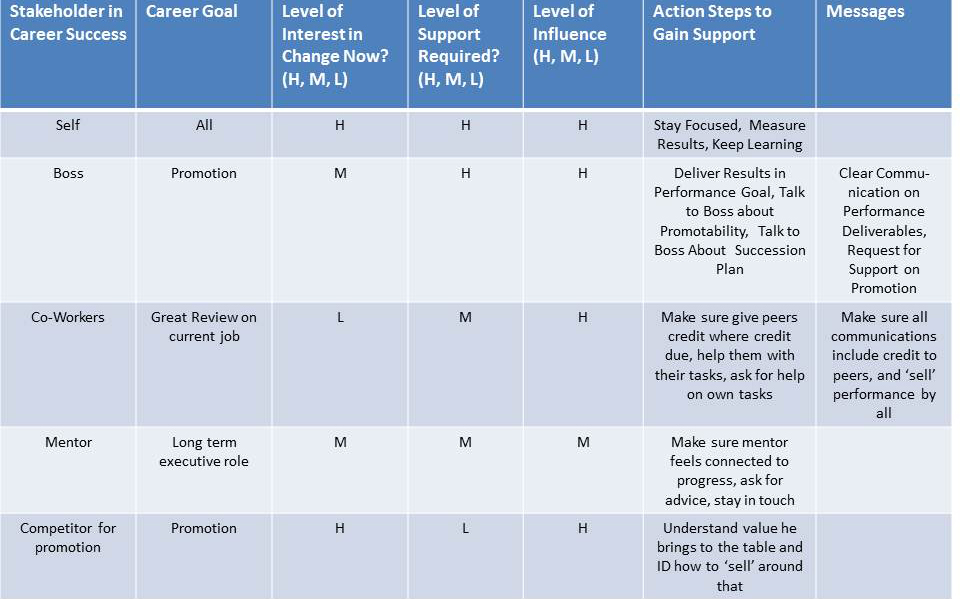
Stakeholder Assessment for your Career

Come Up With a Plan

Then identify which career goal each has an interest in and what that level of interest  is–your boss may have a high level of interest in your successful delivery of your current performance goals, but no interest at all in your promotion to a position outside his organization.  Understanding this, and creating a plan to mitigate your boss’ ambivalence may be essential to getting that promotion.  S/he may sabotage your promotion in order to keep you.  A stakeholder assessment–that requires you to think through all the players and come up with both an action plan and a communication plan for each, is likely to crystallize your thinking of next steps, and to speed your career on its way.

Categorize Them

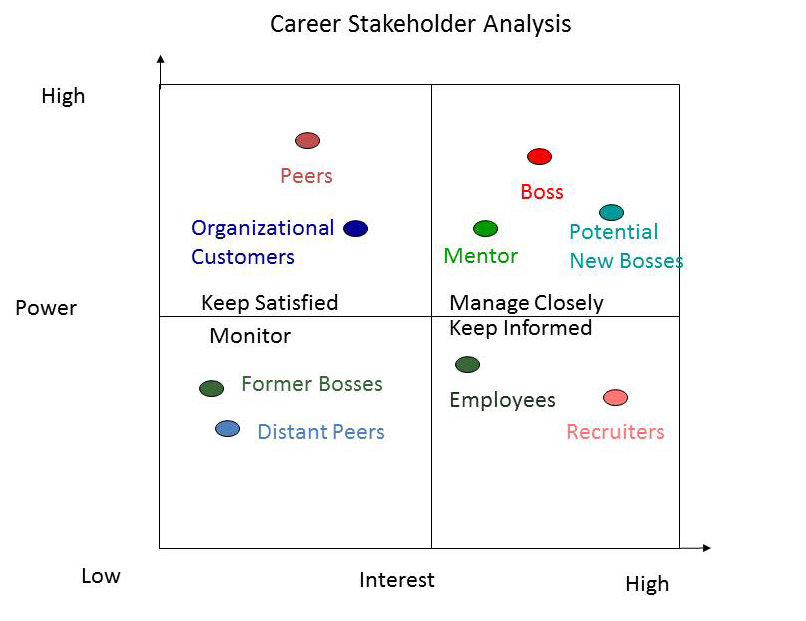
Once you’ve created a grid similar to the one above, you can create a graphic that divides your stakeholders into categories:

  • High Power/High Interest:  Manage Closely (like current boss/potential new boss)
  • High Power/Low Interest:  Keep Satisfied (like peers/organizational customers)
  • Low Power /Low Interest:  Monitor (like former bosses/distant peers)
  • Low Power/High Interest: Keep Informed (like employees/recruiters

Career Stakeholder Grid

Manage Them

Depending on your goals, your organizational situation and your timing, these stakeholders and their position on the grid will be different.  The most important part of this is to think it out–where are your key stakeholders on the support continuum, what is in the way of their full support and what can you do about it?  People feel threatened by other people’s career success and the more you’re aware of what people are thinking, the better you will be able to manage it.  Stakeholders who could be powerful supporters for your career goals may not know what they are–this exercise can help you identify that issue and come up with a great plan to solve it.

Leave a comment

Filed under Career Development, Career Goals, Executive Development, Goal Setting, Job Hunt, Recession Proof

Get Your ‘Get Up and Go’

motivate yourself

I spent much of Sunday morning watching a few hundred people participate in their first triathlon.  It was sixty-something degrees and drizzling.  What would possess these people—all ages, shapes and sizes—to come out in the rain to inflict discomfort on themselves?  They swam a quarter of a mile in a lake, biked 12 miles on rain slick country roads and ran 3.1 miles over hilly trails.  At the beginning and end of each portion of this event, each person had a small cheering section, but for the most part, each participant swam/biked/ran alone, competing against the elements and motivated by him/herself.  How did each person motivate him/herself?  How can you motivate yourself to do whatever your goal is?

Well, the good news AND the bad news is that motivation is individual.  Every person is motivated differently.  Some people need praise to be motivated.  Some people need to feel like they’re contributing.  Some people need to be able to tick off the boxes of their goals to be motivated.  Some people like public recognition, some hate it.  Few people, believe it or not, are motivated solely by money.  In fact, money can be a demotivater–it’s not enough or it’s less than so and so got–you spend more time thinking about the negative than the positive of money rewards.  Anyway, the way you are motivated is unique to you.  You need to figure out how that is and then put it to work for you.  You need to NOT wait for someone else to motivate you.  Others can help (like the individual cheering sections at the triathlon), but you need to take the responsibility and develop the skill to motivate yourself.

There are two types of motivation:  external and internal motivation. External motivation is in play when you are thinking that you “should” or you “want” to do something.  You’ve got internal motivation when you “love” something or you “gotta do it.”

There is a motivational continuum between external motivation and internal motivation.

Motivate yourself

If you are all the way at the external motivation end of the continuum, then your motivation comes not only from outside yourself, but actually from other people—people who tell you what to do.  You’re not doing it for yourself, but rather for others.  If you are at the internal motivation end of the continuum, then you do it because you feel whole when you do it.  You do it despite all the excuses/distractions/opportunities not to do it.  You REALLY do it.

The question is, how do you push yourself toward the internal motivation end of the spectrum?  First you need to understand what motivates you.

  • Are you a planner?  A list person?
  • Do you need to be encouraged by others? Recognized by others?
  • Do you need to feel like you accomplished something? Made a difference?

Think about times when you were most motivated.  What made that happen?  Was it that someone was proud of you?  (External motivation)  Was it that you could look at what was happening and you were proud of yourself? (Internal motivation). Whatever it is that pushes you, figure out a way to put that in your life.  Create a situation that provides the reward(s) that work for you.  They don’t have to be big rewards.  Frequently people are just as motivated by any reward–that they care about–as a big reward.

The key is that you have to take charge of your own motivation.  You will see your performance rocket significantly.  Steve Chandler’s book. 100 Ways to Motivate Yourself, will give you lots (100 to be precise) of ideas on how to motivate yourself.

Start experimenting.

3 Comments

Filed under Career Development, Career Goals, Executive Development, Goal Setting, Success

Career Accelerants

Win the Career Race

Do are you know people who are about your age, have about the same experience, and aren’t more talented/smart/capable than you, but who are more successful in their career than you?  Are you puzzled about what they have that you don’t?  What do they do/who do they know/how do they do it? Do you want to go faster, too?

There are some tools that can help you accelerate your career success.  I call them career accelerants.

Mindset.

How you think.  What you think.  When you think.  All make a huge difference in how fast and how well your career progresses.  Mind set includes:

  • Your Attitude–“I can.  I will.”
  • Being Positive
  • Constantly Learning
  • Being committed

Adaptability.

There is an old Chinese proverb that says that the wise adapt themselves to circumstances, as water molds itself to the pitcher.  The second you get stuck with “this is the way it is” or “I’m not going to do this,” is the beginning of the end of your upward trajectory in that organization.  The way I think of it is, “If I had started at this organization today, I wouldn’t object to this. I would just do it.”  This can apply to systems, processes, organizations, etc.  It doesn’t occur to us to ‘resist’ when we’re new to an organization.  Try to adopt that way of looking at things.

Tools.

Use whatever tools you can to help you learn/understand/experience faster.  Some of the best tools are:

  • Books
  • Feedback
  • Goals/Measures
  • Training

Energy.

You need a high level of energy to speed up your career.  You are more in control of your energy level than you might think.  For high energy you need:

  • Good Health
  • Fitness
  • Mindset

Infrastructure.

Successful careers need an infrastructure too.  Set up your life so that it supports your career.  To do this, you need:

  • A Support System
  • De-clutter your life–get rid of the things that you ‘tolerate,’ but which weigh you down–anything from messy desks to people who suck you dry
  • Balance–whatever this means for you (not what others think).  Keep adjusting this, it is a work in progress.

You are in control of your career.  If it isn’t moving the way you want it to, look at this list and start experimenting with changing the way you’re doing things.

Leave a comment

Filed under Career Development, Career Goals, Executive Development, Feedback, Goal Setting, Personal Change

You Have To Start To Succeed

Some people dream of success while others wake up and work hard at it.

I saw this quote yesterday and LOVED it.  I searched the Internet to try to find the author unsuccessfully, but discovered in the process that this quote has inspired a lot of blog posts.  Rightfully so.  It’s a lot like Nike’s “Just Do It.”  It makes sense, it inspires, and it is right.  If you start, do, work hard, you’ll get there.

Today is June 1.

This is a good day to review your New Year’s Resolutions again. If you don’t have New Year’s Resolutions, that’s ok.  Let’s talk about your goals.  Where do you stand on your goals?  For this year, for this decade, for this life?  Planning, hoping, dreaming of what you want isn’t enough.  It’s a great start, but it isn’t enough.  You have to START.  Just start.  What is the first step?  Write it down.  When will you do it?  How will you know it is done?

Are you committed to your success?  Or are you just hoping for it?  It won’t happen if you don’t DO SOMETHING toward accomplishing it.  Little steps can lead to big journeys.

JUST START.

2 Comments

Filed under Career Development, Career Goals, Executive Development, Goal Setting

There’s Networking, and Then There’s NETWORKING

Do It Before You Need It

I started this blog out of frustration.  I had just talked to my umpteenth client/friend/student/colleague who found him/herself out of a job with a stone cold network and a total freak out about what to do.  (See my first blog post–Get Ready to Lose Your Job)  Networking definitely helps when you need to find a job.  In fact, it is probably the best tool to have in your arsenal for finding a job.  These days, a powerful network can make the difference between finding a job in weeks or months and it taking more than a year.

Networking also helps with just about everything else you might need–getting promoted, finding business opportunities, selling products, building your reputation/brand, getting answers to tough questions, staying in touch, and even finding someone to date (I’ll leave this last one to other blog writers).  You can build your network purposefully, or you can build it serendipitously, but be sure to keep building it. Remember, though, networks are about RELATIONSHIPS, not about numbers or names or tools or connections.

Serendipity

Let’s talk first about building it serendipitously.  There are marvelous tools available now that make it easy and fun.  Facebook, Linkedin, and Google+ are the top tools right now, but there are many more–Plaxo, Twitter, MyLife, etc. Not being involved in a social network these days is like not having a resume or appropriate business attire.  To function in today’s business world–no matter your age or organizational position–you have to be saavy enough to be using social networks.  If you participate in these social networks–let’s say Facebook or Linkedin–and just reach out to people you know and accept invitations from people who reach out to you, you will build your network.  If you particpate in LinkedIn Groups discussions, answer questions and comment on people’s status, you will strengthen the connections/relationships.  If you share a little of who you are on Facebook and comment on friends’ posts, you will build the relationships.  It starts at one level and grows to other levels.  It has to be real.  Superficial interactions are obvious and quickly shunned.  If you do it gradually  over time, then it doesn’t take a lot of time and you have the beginnings of what you need when you need to look for a job or a promotion or business opportunities.

This serendipitous network building also has the benefit of creating a network of strong connections–you know all these people pretty well.  When you need something from these folks, you are more likely to be comfortable asking, and they are likely to respond.  Not much work/lots of potential benefit.  Why not?

Purposeful

The other way to build your network is purposefully.  This is what I recommend.  Take a look at your networks.

On Facebook using myfnetwork :

Visualize your facebook network using myfnetwork

On Linkedin using LinkedIn Maps

Visualize your network using LinkedIn Maps

What do you see?  If your networks are anything like mine (and they may not be–every network is unique), you will see people who are “hubs,” and you will see clusters.  For me, one of the interesting things about these two pictures is that some of the “hubs” of my Facebook network are on the edges of my “clusters” on LinkedIn.  This makes sense to me, because I see these as two different networks.  One is more friends and family and one is more professional.  There is strong overlap between the two, but there are lots of people on one and not the other.  The LinkedIn Maps feature allows you to label the colored clusters.  This provides you with the ability to see the relationships among the groups in your network.

Now, pull up.  Look again.  What do you see?  What is there?  What is missing?

What Do You Want From Your Network?

Do you want a job?  Do you want to make a career change?  Do you want a promotion?  Do you want to make sales?  Do you want business opportunities? Do you want venture capital money? Do you want to build your brand?

Now, based on what you want, look at your network again.  Can it get you what you want today?  What’s missing?  Professional connections in a particular field?  Venture capitalists? Senior executives at other companies?  Senior executives at your company? Are there people at all levels in organizations?  Are there people at all generations in companies?  What about geography?  Do you have a strong network in all the locations you need?

What Are You Going to Do About It?

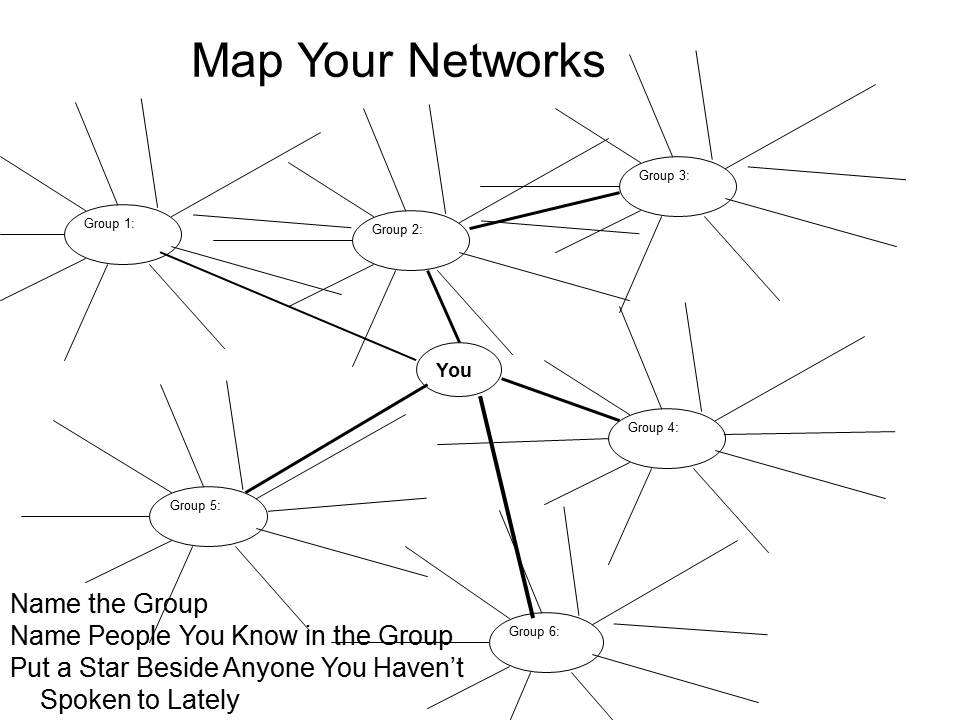
First, let’s go old school.  On paper, or using mind mapping software, do a brain storm of who you know.  Start with the groups you belong to or are associated with.  Once you’ve listed the groups, start listing the people associated with the groups.  Who are the key players in those groups?  Who are the best connected?  Who have you talked to lately?  If you haven’t talked/connected with people, then reach out to them.  Do it via email, phone or one of the social networking sites.  Prioritize people according to the purpose of your network.

Map Your Network Worksheet

Address what is missing.  How can you reach out to people you need to be connected to in those areas that you need to grow?  Get introductions through your existing connections.  Use the helpful tools that LinkedIn provides.  Attend professional functions, follow thought leaders’ blogs and make comments.  Participate in Linkedin Groups discussions.

Create a plan on how you’re going to keep up with your network.  Do regular (but not obsessive) work to stay in touch with your existing network and to grow it.

Some Myths About Networking

  • It’s  about the numbers. IIt’s really about quality connections.
  • It’s about your connections’ job title.  Looking at the visualization of your network should show you that the ‘most’ connected people are not necessarily (and not even likely) the highest ranking.

Some Truths About Networking

  • It has to be real.
  • It takes time.
  • It’s about mutual win/win.
  • It works.

Some Books

10 Comments

Filed under Books, Career Development, Career Goals, Executive Development, Goal Setting, Networking, Recession Proof, Success

Career Check-up

Why a Career Check-up?

Those of us who do what we should have annual physical check-ups.  People who practice preventative health care are much healthier.  We take our cars for their regularly scheduled maintenance milestones.  Our cars last longer, drive better and have higher resale values.  Regular house maintenance (how many of us have given our houses great makeovers when we’re selling them?) leads to fewer crises and higher sales prices.  But how many of us do that with our careers?  Most of us get an annual review for our job, but what about our careers? A job is a role that you play, specific functions you perform.  A career is a professional or work life, a broader view, transportable, beyond your current employer, beyong your current job.  Transportable.  In today’s economy, transportable is priceless.

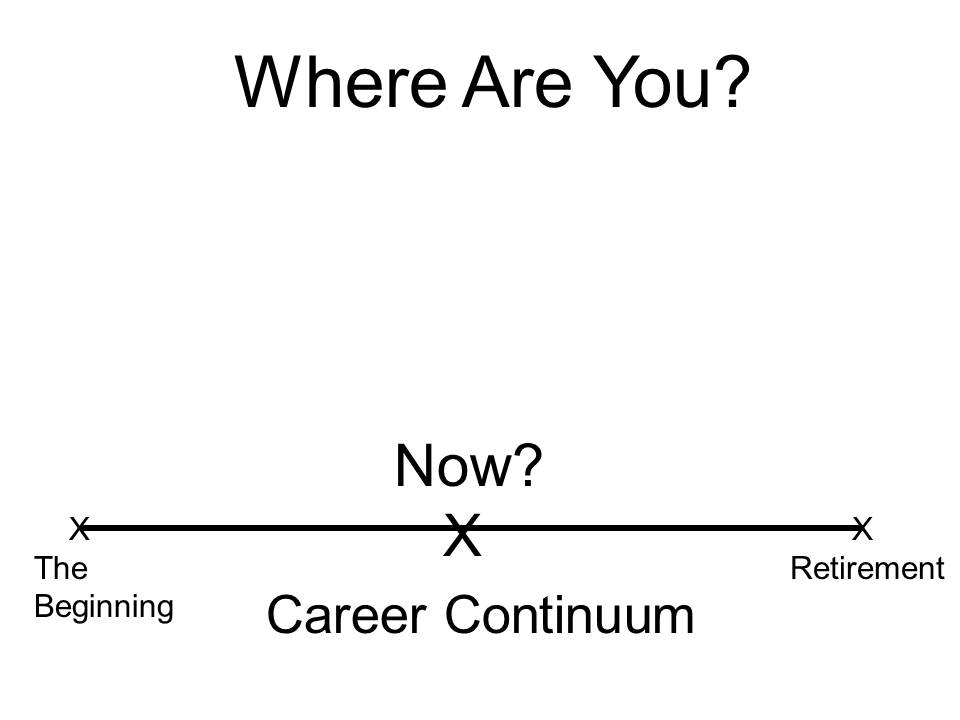
Career Continuum

Career Path

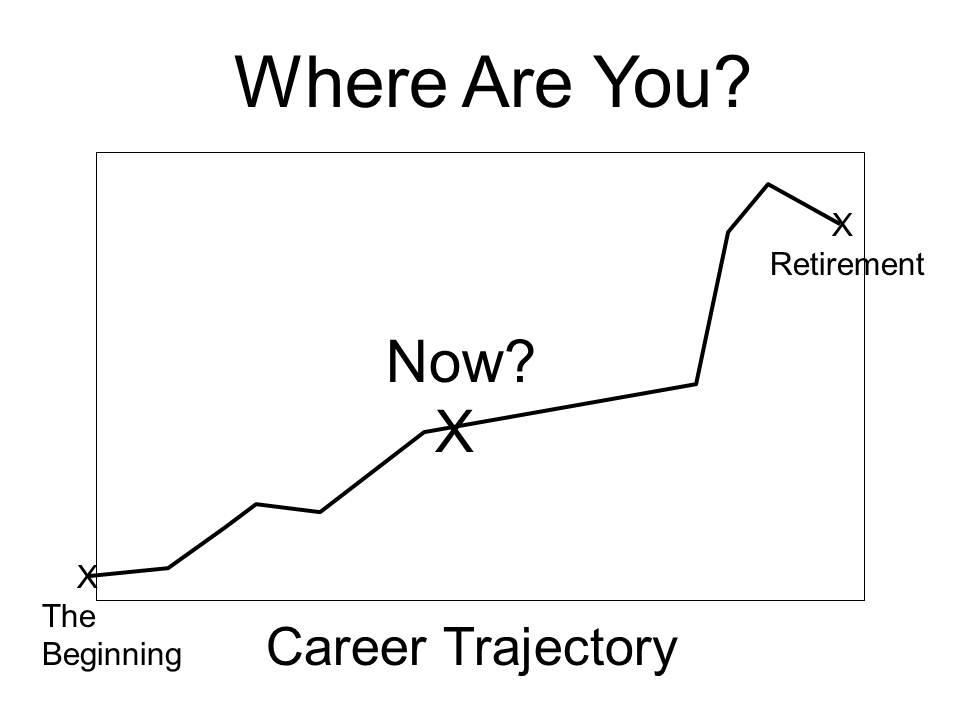
Where are you on the your career continuum?  Where on you compared to where you want to be?  In terms of time–how long have you worked?  How much longer will  you work?  Are you 1/3 done?  Are you 1/2 done?  Between now and what is left, what do you want to accomplish?   As you look at where you are, what do you need to move your career along as fast as you need to in order to get to where you want?

Career Trajectory

Now look at where you are in terms of what level you want to be?  If you are a Director now, do you want to be C-level?  Do you want to have your own business?  Do you want to move into another field?  Do you want to accelerate how much money you’re making?  Are you moving as fast as you want to? Are you being considered for the types of positions you should be to get to the level you want?

What’s Going On Now?

Look at what’s going on at your current organization WITH CLEAR EYES:

  • Are You Valued?
  • Do You Think Your Company Has the Right  Direction?
  • Do You Trust Your Organization’s Leadership?
  • Are There Growth Opportunities?
  • Is There Enough Challenge?
  • Is This Work What You Thought It Would Be?
  • Do You Fit in the Culture?
  • Is This Meaningful for You?
  • Are You Motivated at Work?
  • Do You Make Enough Money?
  • Is This the Right Work-Life Balance for You?

Depending on the answers, you need to decide whether your current organization is the right place for you to accelerate your trajectory pace.  If not, face it now.  That doesn’t mean you need to move now–it means that you need to get ready to move.  (It took me six years to get ready for my next step beyond an organization I truly loved–but once I saw that I needed to go, my focus changed to the next step rather than continuing to stay in an organization that couldn’t deliver my end-state for me).

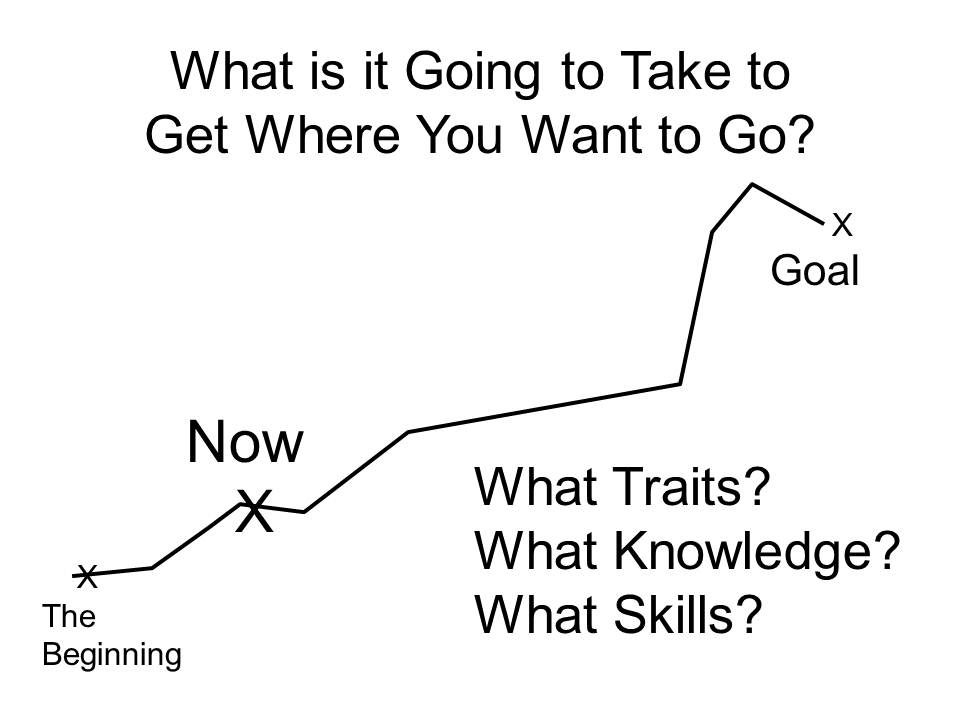
Start Working on What it Will Take

Skills Traits Knowledge

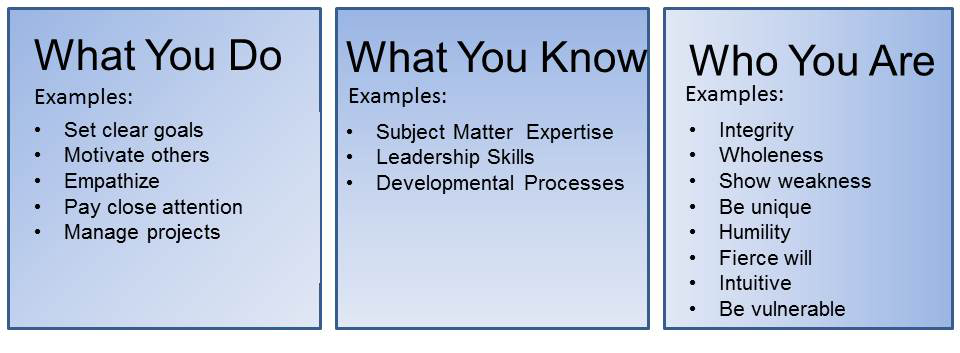
The more specific you can be in understanding what you need to know, do and be in order to reach your goal, the better you can prepare to do it.  If, for example, you are a Director and you want to be C-level, you may need to be much more financially literate than you are now.  You may have to be able to see the big picture better and pull yourself out of your detail focus.  If you are a Project Manger and you want to be a Program Manager, you may need to know how to understand enterprise-level governance of projects and programs.

How Do You Figure This Out?

Look at People Who Do What You Want to Do:

  • What Do They KNOW?
  • What Can They Do?
  • What Are They Like?
  • What is Their “Brand?”

I can rarely persuade people to actually do informational interviews until they are looking for jobs, and usually even then, they are out of a job before they’ll do it.  It is an incredibly helpful tool for a career check-up.  It helps you to understand what it takes to get to the level you want when you talk to people who’ve done it.

  • What do they wish they had known when they were at your level?
  • What is the most important skill at their level?
  • What was hardest to learn/do?
  • What would they do differently?
  • What advice do they have for you?

You walk away with a perspective on what you need to know/do/be.  You are also likely to walk away with an advocate who may start looking out for you.

Create a Project Plan

You know how to do this:

  • Set your goals
  • Identify your critical path tasks
  • Identify the resources
  • Set your timeline
  • Do a kick-off
  • Git-ur-done!

Leave a comment

Filed under Brand Yourself, Career Development, Career Goals, Executive Development, Goal Setting, Personal Change, Success

Let’s talk about the most marketable skill of all

Which Skill is So Marketable?

What is that, you ask?  What could possibly be the MOST marketable skill?  EXECUTION.  Execution comes in all flavors–marketing, IT, Project Management, Human Resources, strategy, operations, software, finance and on and on.

Organizations spend tons of time in developing a strategy and planning.  This work is usually done by the leaders of organizations.  They then communicate the strategy and the plan to the next several levels of the organization for execution.  The problem is, the strategy and the execution of that strategy are rarely aligned.  According to Professor  Marco Iansit  of Harvard  Business School, “Strategy  becomes the product of the firm’s incentives, structures, and patterns of behavior, not the other way around,” in his book,   One Strategy: Organization, Planning, and Decision Making.  In other words, the clarity that those who develop the strategy and the plan believe that they have gets lost quickly through the lenses of the “way things work” in the organization.

Why Organizations Need Execution Experts So Badly

Research says that more than seventy percent of large projects FAIL!  Depending on who you ask, between 75% and 95% of new product launches fail.   Email marketing campaigns have a four percent success rate.  This makes it sound like we’re all incompetent.  But we aren’t.  We (most of us) work very hard trying to accomplish what the company needs/wants.  We just aren’t working on the right things.

Those people who figure out how to execute–to actually deliver what the company needs–are highly valuable and very marketable, both within the organization and outside.  To actually execute the tasks that need to happen for the organization to thrive takes everyone.  It takes fully engaged, fully empowered employees who understand what needs to happen and are willing to do it–so they have to agree enough, believe in it enough, do enough to make it happen.

What Does It Take To Execute?

So what does this have to do with you?  YOU have to engage.  YOU have to be empowered.  YOU have to do it.  This is not about “them.”  This is about you.  If you want to have the most marketable skill, and the career security that goes with that, YOU have to learn how to execute.  And how to get other people to execute.  And you have to learn how to understand the strategy well enough to execute THE strategy, as opposed to some watered down version of it.

It doesn’t matter if you are at the top of the organization, in the middle, or if you just started yesterday.  You need to learn how to understand clearly what needs to happen and then to do it WITH the other folks who you work with.

I’ve recently gotten to work on a string of successful projects.  The difference between them and the ones that are late/over budget/don’t happen/completely fail is:

  • They have a team of people who are committed to getting it done–no matter what gets in the way
  • They have people who challenge things that are wrong–the way people are acting, the lack of resources, the lack of commitment, the inadequacy of the technology
  • No one is on autopilot
  • They have incredibly difficult deadlines
  • Leaders are deeply involved in what is going on

Remember, when you can execute consistently and persistently, you pretty much don’t have to worry about where your next job is coming from.  Companies will want you.

Good Books on Execution

Leave a comment

Filed under Books, Career Development, Executive Development, Goal Setting, Success

Can You Really Earn a Living Doing What You Love?

Do What You Love The Money Will FollowDo What You Love, The Money Will Follow

You hear it all the time.  “Do what you love and the money will follow?” But is it true?  I’d have to say, “Kind of.”  When you are working doing things you love, then it really isn’t work.  It all flows.  You forget what time it is.  You have all the energy you need.  The problems are interesting instead of overwhelming.  At the same time, there are lots of things that people love to do that aren’t easy to earn a living doing.  Golf.  Reading.  Collecting.  Gardening.  Eating.

If you’re like me, as you read the above list, you can think of ways to make a living doing those things.  If you extend these things beyond to related things, there are even  more ways to make a living from them. Lots of ways.  The thing is that we want to make LOTS of money doing things we love.  We want to just do what we love and have a business magically sprout around us.  It doesn’t work that way.  So, if you’re thinking about it that way, then, no, you can’t.

You Have to Work to Do What You Love

It still takes work to do what you love and earn a living from it.  Take me, for instance.  I do what I love.  I coach people to achieve their dreams.  I consult with companies to improve their performance.  I LOVE doing these things.  BUT . . .  I also have to do marketing, proposals, hustle for business.  I don’t particularly enjoy those things.  They are necessary in order for me to be able to do the things that I love.  And because they enable the things that I love, they aren’t as bad as they would be otherwise.

I had to do a lot of work to be able to know how to do the things that I love.  I had to learn, practice and deliver while working for companies–a.k.a. jobs.  I worked at jobs like all the other people who supposedly are earning a living not doing what they love.  A major difference was that I was learning in order to do what I wanted.  I thought of it that way.  That made it easier.  I was working toward doing what I loved.  And because it was going to enable the things that I loved, it wasn’t as bad as it would be otherwise.  Knowing that I was working toward doing what I loved gave me a lot of energy to keep doing it.

Figure Out What You Love

Maybe the hardest thing is to figure out what you love, and then to figure out how to make a living doing it.  If you love quilting, for instance, you can quilt (to earn a living doing this, you either have to make very good quilts that people will pay a lot for, or you need to make lots of quilts (get a quilting machine)).  Or you could have a online quilting auction service.  Or you could have a business that sells quilting tools or supplies.  Or you could design fabric.  Or you could write about quilts.  Or you could take quilt pictures.  Or you could develop  and deliver quilt training.   Or . . . you get the point.

You can love working for a company.  Lots of people do.  You don’t necessarily love working for all companies, but working for some can prepare you to work for the one you love.  It may be a certain kind of company that you love–a restaurant or a trading company– or it may be a particular role in a company that you love.  Whatever works for you.

The way I figured out what I loved was to evaluate all the parts of the jobs that I had really enjoyed–in my case, teaching, figuring out how to fix parts of organizations, presenting, advising–and to figure out what “job” that was.  I had never thought of being a consultant until I went through this process. Once I figured it out, though, the rest was easy.  What skills did I need to be able to do it?  How could I learn them? What was my timeframe?

Not Magic, But Worth It

There was nothing magic about it.  Money didn’t instantly appear.  I had so much fun, though, that it didn’t really matter.  The problems were interesting, not insurmountable.  Doing what I loved helped me pick myself up after setbacks and keep going.  The more I learned, the more fun I was having.

So, yes, you can earn a living doing what you love.  You just have to work at it.

Leave a comment

Filed under Career Development, Career Goals, Executive Development, Goal Setting, Personal Change, Success

It’s the End of First Quarter. How Are Your Resolutions?

Most of Us Make Resolutions

The website, The Statistical Brain, says that 45% of us make New Year’s Resolutions and 8% of us succeed with them.  Thirty nine percent of folks in their twenties succeed, compared to fourteen percent of folks over age fifty.  (Now what is that about?)  The bottom line, lots of us make resolutions and few of us manage to succeed at them.  I’m not going to go into all the reasons this is true, but I will give you some tips on how to keep working on them (if you still are), or how to start again if you’ve already given up.

New Years Resolutions

Pick One

Look at your resolutions.  If you have more than one, pick the MOST important one.  If you only did one this year, which should it be?  If you’re anything like me, then many of your resolutions are inter-related.  That’s ok–one is still more important, or more foundational than the rest.   Now, in order to accomplish that resolution, what is the first step?  The VERY first step?  When are you going to do that?  Be specific.  VERY specific.

Write It Down

Use a journal.  Write down the goal.  Write down the steps.  Write down the dates.  Now, write down what it’s going to be like when you have accomplished it.  Specifically.  VERY specifically.  How will you feel?  Who will be happy?  How will things be better?  When will you be able to start on your next resolution because you finished the first one?  Write it all again.  And again.  Write it till it isn’t writing about the future, but it feels like the present.  Write it till you are so familiar with it that it feels uncomfortable because what you’re writing hasn’t happened yet. Write it.  Write it. Write it.  Write it every day.

Change

In his new book, The Power of Habit, Charles Duhigg says that about two-thirds of our behaviors are based on habit.  Our morning routine, our drive to work, our morning email, internet usage, our interactions with our co-workers, and on and on and on.  There is a good reason for this.  It is how our brain economizes–it routinizes what it knows and can then use the brain power on other things.  I do my best thinking when I’m driving.  Just think–if I had to pay as much attention to driving as I did when I was sixteen–what tremendous thinking would be lost:-)  The bad news is that in order to acquire a new habit (and succeed with a resolution), you have to overwrite the old habit, one that the brain has efficiently and effectively turned into rote behavior.

In order to create a new habit, you need a cue–a signal to your subconscious that you’re about to perform the new habit.  Example:  Resolution is exercise; running is exercise of choice; cue is putting on running clothes as soon as you get up; new habit is run first thing in the morning.  Then you need a reward.  It actually doesn’t have to be much, just something that feels good after you perform the new habit.  Listening to your favorite song.  A small glass of your favorite juice.  Something.  Every time.

Dubigg says that when a habit is formed, the brain stops participating fully in the decision-making.  So, you need to put the brain back into the decision-making as you extinguish the old habit and take it back out when the new habit is established.  There is evidence via MRIs that different parts of the brain fire as old habits (and brain patterns) are replaced with new.

The Power of Habit is the best book I’ve read so far this year.  I highly recommend it.

Get to work on those resolutions!

4 Comments

Filed under Books, Career Development, Career Goals, Executive Development, Goal Setting, Personal Change, Success