Category Archives: Career Development

Which Comes First, Success or Happiness?

One of my favorite coaching clients recently told me a story.  She said that her brother went into a florist and while checking out, spotted a framed Master’s or Doctorate diploma in Engineering on the wall. He asked the store owner why the diploma was there. The man said, “To remind me why I am a florist.”  My client went on to say, ” while it’s great to succeed, make sure you’re succeeding because you’re doing what you want, not succeeding despite what you want to do.”

My experience is that unhappy people can’t experience their success.  Others can look at their accomplishments and think, “Wow, that person is really successful.”  S/he is an Executive VP or a CEO or a millionaire or a business owner.  Those are the hallmarks of success, right?  If you talk to people with these credentials, however, you’ll sometimes find that not only do they not see their success, they are driven to hit the next goal, and the next one, and frequently you’ll find that they are not happy.  For folks who have not hit these marks yet, and strive for them, that seems incredible–how can they not be happy if they have . . .?”

There are several reasons these folks aren’t happy.  Sometimes, to my client’s point, we’re working toward someone else’s success.  We’re doing what we think we should, or our parents wanted us to, or because we believe that it is the only way to pay our kids through college.  For some people, there is a lot more happiness in striving than in achieving.  That’s true in part, because we think there is a magic in achieving and everything will fall into place once the goal is achieved. When the magic doesn’t happen instantly, then there is a tremendous disappointment and disillusionment.  Some folks don’t believe deep down inside that they deserve success (or happiness, for that matter) and they never see that they’ve achieved it.

Look at it the other way, though.  Are happy people successful?  I’d have to say, yes, in my experience they usually are.  There are several situations that are work related that can contribute to your happiness.  First, if you are working at your “calling,” then it gives your life and work meaning.  Second, if you are challenged and building your skills, that usually creates happiness.  Third, if you can see that you’re making a difference, then that usually contributes to happiness.  Happiness is less about the end state (success by some people’s definitions) and more about what is happening now.  If you like what is happening now, however, you are usually focused on it and delivering at a high level, and that leads to success.

So, are successful people happy?  Sometimes.  Are happy people successful?  Usually.  Happy people’s success is usually self defined, though, rather than “other” defined.  Others usually agree, though.    Seems to me, then, that it would be more productive to work on being happy, rather than being successful, because you’re more likely to get two for the price of one.


Leave a comment

Filed under Career Development, Career Goals, Executive Development

Rot at the Top

Is All Corporate Leadership Rotten?

When I taught leadership, I always discussed Manfred Kets de Vries’ (see his book, The Leadership Mystique)  theory that  when organizations go down the drain, it is usually because of rot that started at the top.  Many (most? all?) of my students took this out of context and seemed to think that corporate leadership = rot at the top.  This is troubling on two levels–first, it is very distressing that my students  have enough evidence of misbehavior of folks at the tops of organizations to generalize to all corporate leadership.  Just as troubling, though, is that if you think that corporate leadership is immoral and corrupt in general, then you don’t strive to be a corporate leader.  Or, worse, you sabotage your career when it gets close to where you start to see yourself in a leadership role.

There certainly are lots of examples of organizations whose leadership has behaved corruptly and immorally.  There are also examples of organizations where the behavior may not go all the way to corrupt, but certainly isn’t admirable or something to aspire to.  There are hundreds of thousands of organizations, however, where the top leadership is genuinely trying to do a good job and trying to help the organization to succeed.

Leaders Are People, Too.

These leaders are people too.  They used to be middle managers and before that they were college students and before that, they were fifth graders.  They do things right and they do things wrong.  They have crises and families and flaws and strengths.  They aren’t perfect.  But neither are they perfectly bad.  These leaders can be influenced by leadership at all levels of the organization.

Informal leadership at all levels

Step Up to Be a Leader

Organizations that have leadership at all levels of the organization are far less likely to have bad leadership at the top.  Leadership doesn’t require a title.  It requires stepping up, doing and saying the right thing.  It requires not going along, when it would be easier to do so.  It requires asking questions, and listening to people who are closer to the issue.  Leadership doesn’t require positional power.  It requires personal power.  Personal power comes from being respected–because you are very knowledgeable about things that the organization needs (expert power), or because you have the ability to influence others (referent power) or because you are connected to the “right” people (connection power).

Organizations are becoming more aware of the power of informal leadership.  An organization called Keyhubs helps organization evaluate and leverage informal leadership networks.  Work on becoming a leader–wherever you are on the org chart–so that when your organization realizes they need to care about informal leadership, you are sitting there,  leading.

Leave a comment

Filed under Career Development, Executive Development, Leadership

Genericize Yourself, Increase Your Options

Change Your ThinkingBroaden Your Opportunities

For the first ten years of my career, I did product development and operations at an electronic publisher.  Before the Internet.  Explaining what I did was very hard.  (It would be a lot easier now).   When I started looking at other career options, I found that there were a limited number of electronic publishers in the country and none of them were within 100 miles of where I lived.  If I wanted to work at another company, my options were pretty limited.  I looked at job postings (again, before the Internet) and I couldn’t find anyone looking for anything remotely similar to what I did.

The fact that my company was being sold made me realize that I needed to figure out ways to open up more opportunities.  The way I did it was to examine the positions within my company that existed in other companies in my community–human resources, organization development, strategy, government relations, fulfillment, and customer service.  I looked at ways that I could get more experience in those areas so that I could market myself to other companies.  Luckily, I didn’t get swept up in the layoffs associated with the sale of the company.  Also, I was lucky that my company was open to me getting experiences in other departments.  I acquired enough experience to make myself credible in a number of different positions.

Then Broaden Them Some More

Today, if I wanted to genericize myself, I would do it differently.  I would become an expert who is broad and deep in a subject area that expands beyond inside-organization jobs to external contractors and consultants.  These would be jobs like Project Managers, Program Managers, experts in ERP systems,  global operations or social media marketing.  These would expand the opportunities to reflect the way job opportunities exist now–inside and outside companies.

And Then Some More

At the same time that you are building your skills to make you credible across companies/industries/delivery models, you should be building your brand as a complete player in your area of expertise.  If you want to go to the top you also will have to make it all fit together.  Your understanding and performance at that point will have to be broader than it is deep.

All of this requires that you look beyond today’s job to tomorrow’s job and beyond.

2 Comments

Filed under Brand Yourself, Career Development, Career Goals, Executive Development, Personal Change, Recession Proof, Reframe

Being Told “No” Changed My Life

The most important lessons I have learned came from people who told me “No,” or “Do it faster.”

NO!

I was “reorganized” into managing a large department with twenty managers reporting to me.  Only a few of those managers had been in the their position prior to the reorganization and few of these managers knew each other very well.  I decided that they  needed leadership development training, both to give them the skills to succeed at their jobs and to help bond them as a team. I proceeded to get estimates from several vendors and took the best of them to my (also newly reorganized) boss.  She looked at the proposal and said “No.”  She didn’t believe in that kind of training and she certainly wasn’t willing to spend that much money in this newly configured organization.  It was a well thought out proposal, with a a curriculum that was well designed to set my whole organization up for success.  I couldn’t believe she was saying no.  She said, “If you really believe in this, do it yourself.”  I don’t know if she was calling my bluff, or if she was just  blowing me off.    I went away pissed.  I had never really had a boss tell me no before on something that I thought was that important.  But she clearly meant it.

I thought about it.  What would it take to create the training myself?  I had never done anything like that before.  I did it.  I probably did it because if I didn’t, she would be able to say that I didn’t really believe it was worth it.   It changed my life.  It changed my career.  I found that I loved developing and delivering this kind of training more than anything I had ever done.  And I never would have/could have known that if my boss hadn’t told me no.    I went on to create an executive development program for the company (different job) and to create a business doing for other companies.  All because I was told no.  I probably should thank her, huh?

Do It Faster, Much Faster!

I was hired by a CEO client to implement his company’s strategic goals.  I put together what I thought was a very aggressive timeline to get it done.  As far as I was concerned, to hit my timeline it would take absolutely everyone in the organization doing everything they needed to do as quickly as they could to actually hit the schedule.  I pride myself on being an optimist, though, so I had hope that we could do it.  His reaction to the plan? Do it quicker!  Much quicker!  He looked at the plan to hire key players and cut the time to do it by 80%.  Absolutely impossible! I thought.  He was unyielding, and I decided to see just how fast I could do it.  I was shocked to find that we were able to meet his deadline! I won’t even tell you how fast we did it, because you wouldn’t believe me.  It took managing each task with urgency.  It took not approaching the tasks as “business as usual”, but rather with focus and intent to get it done quickly.

When you go into work on Monday and look at what you have to accomplish this week, think what it would take to get it done by end of day Monday.  Your first reaction is likely to be like mine:  impossible.  Think about it, though.  What would it take?  What if it meant you had to to keep your job?  To feed your kids?  You get a lot more creative (and urgent) when the stakes go up.

The Lesson

The difference between taking no for an answer and not, is your decision.  The difference between “business as usual” and moving fast enough to deal with this constantly changing world is your decision.  It’s your mindset.  You have the ability to reframe like I had to at any time.  You don’t have to be told no, and you certainly don’t have to take “no.”  You can DECIDE to do it anyway.  You can DECIDE to do it fast.  And once you learn this, you won’t be the same.

4 Comments

Filed under Career Development, Career Goals, Executive Development, Personal Change, Reframe

Are All Organizations This Crazy?

People frequently ask me, “Are all organizations like this?”  This political?  This crazy? Yes and no.  All organizations are functional and dysfunctional in their own ways.  Like families.  Even the very best organizations rub some people the wrong way.

Organizations are combinations of people, personalities, power structures, networks, needs, wants and everything else you can think of.  Organizations are environments.  They are ecosystems.  You can’t control them.  You can  only control how you interact and react to them.  You can understand them.  The more you understand how organizations in general work and how yours specifically works, the more successful you will be.


We all have a tendency to think “it’s all about me.”  The problems I’m having in this organization are unique.  This organization is unique.  My boss is unique. My relationship to my peers is unique.  And, of course, to a certain extent, that is  true.  There are significant commonalities, however, across organizations.

Ichak Adizes has done research and writing about organization life cycles., http://www.adizes.com.  His theory is that all organizations grow through a series of life-cycle steps and have predictable problems and behaviors at each step.  His theory is that all organizations (if they make it) go through:

  • Courtship
  • Infancy
  • GoGo
  • Adolescence
  • Prime
  • Stable
  • Aristocracy
  • Early Bureaucracy
  • Bureaucracy
  • Death

All of these steps (like bureaucracy and death) aren’t inevitable, but it requires leadership to take specific steps to reset the organization to an earlier life stage.

If you understand, however, which stage your organization is in, then you can see the organization differently.  It isn’t so much crazy as struggling with where it is and what it is trying to get done.  You can stop being so affected by what’s going on around you and start being effective.

Leave a comment

Filed under Career Development, Executive Development, Personal Change

Are You On Your Way to Failure?

Derailment

Executive coaches call it “derailment.”  Derailment happens when the organization has made an assessment of you that basically takes you off the planned (yours or the organization’s) trajectory of your career.  Derailment is usually talked about from the perspective of the organization–you’re not living up to expectations.  From your perspective, you feel that you’re stuck.  You are not moving up anymore.  The new jobs, promotions, or opportunities have dried up.  This might take a while to notice.  It usually is noticed by the organization much sooner than you notice it.

Evidence of Being “Stuck”

The evidence is easy to miss at first.  The  way most people notice it is that things are just not going the way they used to go.  It’s longer between promotions.  Someone else is asked to do the special project (or in some organizations, you are the ONLY one asked to do the special projects.)  Your boss doesn’t ask your opinion as much.  You feel shunted aside.

Being Able to See That You’re Stuck is a Lucky Break

Ironically, one of the things most likely to cause you to get off your career track is what has helped you succeed so far.  In other words, as you move up levels in organizations, your strengths become weaknesses.  Just like the things that worked for you in 5th grade, didn’t work for you in high school;  the things that make you an outstanding individual contributor don’t make you a great team leader. If you are highly technical or detail oriented, and you’ve been praised for your tactical implementations, the next level may require you to let go of some of the details and to see the big picture.  If you have been a heads down technology star and got promoted to be a manager, you need to pull your head up and learn how to deal with interpersonal issues.  If you have always been the smartest one in the room, but a little abrasive, and you suddenly are leading a team, that abrasiveness will cause you real problems.   If you are the boss’ favorite and suddenly that boss is gone, you’re in trouble.

The sooner you see that there is an issue, the sooner you can start working on it and the sooner you can get back on track.  It’s possible to re-energize your career, even at the same company.  The first step is to understand what it is that is in your way.

Most Common Causes of Derailment

Lois Frankel lists common reasons for derailment in her book, Overcoming Your Strengths, Harmony Books (New York 1997):

  • Poor People Skills
  • Inability to Work As Part of a Team
  • Inattention to Image and Communication Style
  • Insensitive to One’s Effect on Others
  • Difficulty Working with Others
  • Too Broad or Too Narrow a Vision
  • Lack of Concern for Customer or Client  Needs
  • Works in Isolation.

The Center for Creative Leadership includes others based on their research:

  • Too loyal to a boss or organization
  • Too personable–relies on relationships to get things done
  • Inability to adapt
  • Failure to deliver results

But None of Those Are True of Me

I don’t know about you, but I wouldn’t want to admit any of those are true of me.  The easiest way to be able to see the “off-ness” of your behavior is to frame your observations as if you just started this job, instead of finishing up your 15th year with the organization.  When you are new to an organization, you are MUCH more open to reading the signs that people are putting out.  You are much more able to assess your performance in the eyes of the people who matter.

If you feel “stuck,” start paying attention to how you interact with the organization.  Ask someone you trust to tell you the truth.  (Remember telling the truth in this situation is very hard).  Listen, and thank the person.  Then leave.  Don’t get defensive.  Don’t debate.  Leave.  Think about it.  The person might not be right, but s/he is giving you important information–a perception about you.  You know they say perception is reality.  You can’t deal with it if you don’t know it.  You need to spend some time thinking about it.  And maybe getting some more feedback.  And maybe observing yourself in the organization as if you were a new employee.

Expect Emotions

This is not easy.  Expect to be unhappy about it.  That’s ok.  Give it some time.  It’s better to feel it now than when they fire you.  You’ll get over it.  Once you can be more rational about it, figure out what you are going to do about it.

Leave a comment

Filed under Career Development, Derailment, Executive Development, Personal Change

Who’s Looking Out For You?

Are you a “High Po?”

A ‘High Po’ is a high potential employee.  Organizations identify employees as high potential and invest in those employees.  Companies identify and invest in high potentials (HPs) because they believe that the HPs have the qualities necessary to be future leaders of the organization.  Companies send HPs to training, give them developmental assignments, provide them with mentors, and monitor them throughout their careers.

There is nothing scientific about how organizations choose these people.  Some organizations do formalized evaluations that includes an evaluation of the traits, skills, and behaviors of employees who have succeeded, other organizations simply ask managers. Sometimes organizations are right in who they choose.  Sometimes they are wrong.  Sometimes they leave people who are just as much a HP sitting on the sidelines.

So What?

If you haven’t been picked as a High Po, does that mean that you can’t/won’t be a leader in your organization?  Absolutely not.  Organizations need great leaders with skills that will help the organization deliver the strategic goals.  If you show the organization that you have the ability, skills, and energy to lead, they will completely forget that they didn’t identify you earlier.

So, What Do You Do?

Treat yourself like a High Po.  Create your own Executive Development program focused on growing your own skills.  Provide yourself with the training, developmental assignments, get yourself a mentor and measure your progress. Don’t wait for your  organization to do it for you (and, by the way, a lot of organizations don’t do it for anyone). Who cares as much about your career as you do?  Who wants you to succeed as much as you do?

So, How Do You Do It?

Here’s a list to start:

  1. What skills does the organization need to be able to deliver on its strategic goals?  From people at your level?  From leaders?  From Executives?  What’s missing? (This is important because this is the way the organization thinks).
  2. What is the  (yours/your organization’s )assessment of you? What strengths do you have? What gaps are there in your skill set/experience?
  3. Looking at your skills/strengths and the org’s needs–where do you fit?  Where do you want to fit?.  What can you do to start to fill in skill gaps?  What kind of class/reading/experience can you give yourself to start developing your skills?

Here are three books that might help:

Take Yourself to the Top by Laura Berman Fortgang

  Changing on the Job by Jennifer Garvey Berger

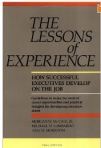
   Lessons of Experience by Morgan McCall

Leave a comment

Filed under Books, Career Development, Executive Development, Personal Change

Manage Your Boss, Manage Your Career

Isn’t Your Boss Suppose to Manage You?

Yeah, in an ideal world, your boss is smarter than you.  You boss is a leader who inspires and motivates you.  Your boss knows how to get the roadblocks out of your way and how to recognize all the things that you do right and guide you through your mistakes.  That’s the ideal world.  If you’re lucky you have a few of these bosses in your career.

They Aren’t All Like That

Bosses come in all shapes and sizes.  Some of them are brilliant and some of them are stupid.  Some of them are leaders and some of them are spineless.  Some of them know how to do your job better than you do and some of them don’t.  As you move up the organization, if you’re good, at some point you surpass your boss’ skills and ability.   If you’re lucky, that doesn’t happen until you become CEO.  For most of us, though, it happens significantly before that.

I talk to clients all the time who rail against this.  They have a certain belief set about how bosses should be and they waste an awful lot of time and energy being frustrated because bosses don’t live up to expectations.

Get Over It

I’m sorry to be unsympathetic, but we don’t get to have the boss of our choice.  Even those of us who take a job specifically to work  for a certain boss frequently get moved away from that boss long before we’re ready.  Bosses are just one more factor that you need to learn to manage to succeed at your job–just like resource constraints, market changes, difficult employees,  partnerships, etc.

Managing your boss is critical to your career success.  The great guru on management, Peter Drucker, not only said that you needed to learn to manage your boss, but also said it was “easier” than managing your subordinates.  He suggested that you write a semi-annual letter to your supervisor (that was the word they used in the 1950’s when he wrote this) that details not only your goals  for the next six months, but also what help you need from him.

So How Do You Manage a Boss?

The first thing to do is to see the world (and you) through your boss’ eyes.  Give the boss the benefit of the doubt.  What is s/he trying to do?  Why?  Remember, almost no boss gets up in the morning with a goal of making your life miserable.  They are trying to get their boss’ goals accomplished.  They are working with the resources they have (including intelligence, patience, knowledge, or lack thereof).  Your boss will be more inclined to help you/be the leader you want if s/he sees how that will get his/her goals accomplished.  Remember, bosses are people too.  They need help, appreciation, respect, and friendship just like the rest of us.  This means that you don’t make your boss’ life worse, you try to make it better.

Build the Relationship. Focus on the relationship.  Don’t take it for granted. The inability to get along with your boss is a major career derailer.  Just like marriages take work, boss/subordinate relationships take work.  Don’t wait for your boss to take the initiative–it is as much on you.

Communicate, communicate, communicate.  No surprises (either way) is an incredibly good rule.  Don’t assume that your boss knows things because you do.  Make sure your boss knows what you do to make his/her life better.  How else will they find out?

But You Don’t Want to be a Kiss Up, Right?

Don’t be a kiss-up.  Find a way to reframe the relationship so that you can be comfortable with managing your boss.  The last time I had a boss who absolutely make me crazy and I couldn’t find any comfortable way to interact, I decided to think of my boss as if she were a customer.  I was able to treat her with respect and do what she needed no matter how she treated me, and then I was able to walk away without being emotionally wounded.  Try reframing the way you see the relationship.

All of this will help make you a better boss, too.

2 Comments

Filed under Career Development, Executive Development, Goal Setting, Personal Change

It All Starts With That First . . . Step

Know What You Want

I used to be in charge of Executive Development for a large corporation.  One day a middle manager came to talk to me about her career dreams.  Within the organization, she had been designated a “hi po”–a high potential with the ability and likelihood to progress several steps higher.  She was a good performer at her management job.  She was quiet and soft spoken, and well respected among her peers.

She told me that she wanted to work internationally.  She became quite animated as she discussed the kind of opportunity she wanted.  Our company provided, at that time, international opportunity for the very top leadership, but not for others.  Best case, she would have to wait years and have many other assignments before she got an international assignment.  Worst case, it wouldn’t happen at our company.  I didn’t share that explicitly with her, but we both knew it.  Instead, we talked about the kinds of skills she would need to be good at such an assignment and how she  could acquire those skills while she was working at her current job.  She went away with some lists and lots to think about.

Get Ready

She took a couple of different assignments within the company that broadened her skills.  Her desire for an international assignment didn’t abate, though, and she began to research opportunities.  She investigated recruiters and companies that could provide her with the kinds of opportunities she wanted.  She read about being an expatriate and came back to talk to me about the risks associated with that.   She discovered that failure rates are high and can vary between 10% and 50% depending on the country.  The reasons for failure range from cultural adjustments, language differences, assignment overburden, physical breakdown, and family stress to organizational issues such as a change of strategic direction, or failure to provide sufficient support.  Some organizations do a very good job at preparing employees for international job change, as well as helping them repatriate when the assignment is complete.

Doing it on your own is a completely different.  You have to teach yourself the things that the company would want you to know.  This preparation process took several years for her.  She was successfully employed during this time, but at the same time, she was focused on her goal–finding an international assignment where she could be successful.

Go

She found a job opportunity.  Luckily, there were people she knew connected to the company (this is highly recommended) and they were able to provide some
support.   She took a job in a country far from home–on the other side of the world.  She was lonely and overwhelmed and she turned all that into a blog-like communication to her friends and colleagues.  She told us about her new experiences–her challenges with different cultural norms at work, living in a building with an elevator but erratic electricity, travel, food, and expectations.  She worked several years for that company, landed another job at another company-same country, and then with another company, different country.  She continues to learn and grow and be a valuable asset to her employer.  And she is living her dream!

That First Step

All of us who received her communications were absolutely awestruck by her bravery.  She was actually doing it!  We were jealous.  What experiences she was having!

She did it for herself.  She didn’t wait for the organization to do it for her.  She didn’t let the reported failure rates, or the things she didn’t know how to do, or the fact that her current organization didn’t have the opportunities, or the thought of selling her stuff, moving and being completely out of her comfort zone stop her.  She took one step at a time, with a clear eye on what she wanted and where she was going.

What’s Stopping You From Taking That First Step Toward Your Dream?

1 Comment

Filed under Career Development, Career Goals, Executive Development, Goal Setting, Job Hunt, Personal Change

How Can I Know What I Want To Do (When I Grow Up)?

It’s OK to have changing career goals.  It is normal, in fact.  Many people either fell into their current career by happenstance, or they selected one that is no longer (or never was) satisfying.  They struggle to figure out the “right” career for themselves.  What is not OK, though,  is to continue in a career that doesn’t fit without a plan to change it.

There are some questions that help you figure out what’s best for you:

First the Practical Questions:

  1.  How much money do you need to make?
  2. What skills do you have/can you get?
  3. How much time do you have to reach your goals?
  4. What do you believe are the  real constraints that exist in deciding what you want to do? (Things like you probably can’t take your three year old into the rainforest while you do eco-research.)

Now the Passion Questions:

  1. What rewards are most important to you to get from a job? Money? Learning? Creative outlet? Status?
  2. What are you doing when you forget what time it is?
  3. What would you do if you won the lottery and money was no object?
  4. What energizes you?
  5. What are your favorite activities?

Now What?

Martin Yate, who writes lots of career books, http://www.knockemdead.com, suggests in his book, Knock ’em Dead Secrets & Strategies for Success in an Uncertain World, that you should actually have three careers .  He advises that you have a core career (the one that pays your bills), an entrepreneurial career (the one where you venture into ways of making money and growing a business beyond your core career) and your dream career (the one that you really want to do, all other things being neutralized).

When I applied this idea, I found it easier to succeed at my core career.  I was focused on growing skills in my core career that would benefit my other two careers.  Working toward my dream career, even though I was living with my core career, energized me.  I found myself able to be more effective at all of them because the passion was back in my work life.  I saw the benefits of my “day” job for my dream job and had a completely different attitude.  My different attitude and increased effectiveness led to more rewards in my core career, and that in turn sped up the process of moving toward my other two careers.

So . . . What Do You Want to Be When You Grow Up?

Leave a comment

Filed under Career Development, Career Goals, Executive Development, Goal Setting