
Do you frequently use the excuse that you don’t have enough time to . . . Network? Spend time with the kids? Exercise? Learn to ski? Write a book? It’s an excuse I frequently hear in my coaching practice. The reality is that you have all the time that there is. There are 24 hours in a day, 168 hours and 10,080 minutes in a week. That is the same amount of time that Galileo, Thomas Edison (1093 patents), Benjamin Franklin (an author, printer, political architect, scientist, musician, postmaster, inventor, activist, librarian, statesman, and diplomat) and Martin Luther King (you know what he did) had. How is it that they were more productive with their 168 hours than we are?
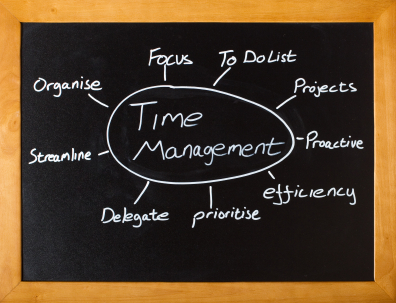
There are only four things to do with your “To Do” list:
- Do it.
- Delegate it.
- Postpone it.
- Forget it.
Otherwise known as DDPF. As you can see, more of these are “To Don’ts” than “To Dos.” All of the best time management systems help you figure out how to do these things. Systems such as Franklin Covey and Getting Things Done help you prioritize and decide whether to DDP or F. How many times have you started a new process/system with hope and motivation? Me too.
There are two key parts to managing your time to accomplish your goals and live your dreams: Goal clarity and focus.
To do this, make a list of all your goals. Include short term, medium term and long term. Get them all down. Look at the list. Are there groupings you can make, i.e. House Improvements/Get Out of Debt/Get Promotion? Once this list is completed and you’ve put them into appropriate groupings, pick the most important. Think long term. What will make the rest of your life better if you get it done? For example, if you look at the list above–house/debt/promotion–it might be ‘get a promotion’ because that would help you get out of debt and let you hire someone to do the house improvements. If you’re anything like me, you’ll resist picking only one. Do it anyway. If nothing else on your list got done, what most needs to get done? OK, now you can pick the next most important and the next most important. Stop at three. You have now gotten goal clarity.
Think creatively. Are there ways besides you doing it to get some of these things done? Get rid of as many as possible–delegate them, postpone them, or decide not to do them for a while.
The next thing that you need to do is FOCUS. We all pride ourselves on being multi-taskers. Me too. Multi-tasking just slows you down, though. You really can only focus on one thing at a time. AT. A. TIME. That time might just be seconds, or minutes, but your mind can only think of, work on, deliver one thing at a time. If you don’t agree, just indulge me for a little longer. The system that I use is called Personal Kanban, http://www.personalkanban.com. This system has helped me enormously to focus and get things done. It has you divide all your “to do” tasks into: Waiting/Doing/Done. If you follow it, it forces a level of focus that allows you to concentrate and finish things. You should put the tasks that will help you accomplish your first three priorities in the “Waiting” category (you can use white boards, paper, an app, or a Powerpoint slide, which is what I use). Select the first task, move it into the “Doing” category, and as one of my favorite bosses says, “Get Ur Done.”
I was shocked at how much this system improved my ability to deliver the important things that I was working on. You won’t accomplish your important goals and life dreams, however, if you’re just taking your list of things to do and skipping the prioritization. Once you’ve gotten your top three done, then you can move on. You can look at it from a “today” perspective, or a “this week” or even a “this year” perspective. Just get focused on what is important and concentrate on those things.
Try it. See what you think.
 Jo McDermott