Category Archives: Goal Setting

So you want to start your own business . . .

get ready to start businessGet Ready!

I talk to a lot of people whose life goal is to start their own business.  For most of them, it’s a “some day . . . ” kind of dream.  You can’t start too soon. There are tremendous opportunities to use your jobs between now and when you’re ready to learn things that will help you.  There are lots of skills that you need to develop to be able to hit the ground running with your business.  Why not be ready to succeed when you start your business?

To start your business, you need at a minimum (and not necessarily in this order):

  • Confidence
  • Money
  • A Product or Service
  • Customers
  • Marketing skills
  • Management skills
  • Finance knowledge

You can buy some of these, but most of them you had better have enough to be able to oversee the basics until you can hire it in.

I know lots of people who have had their own business.  Some were successful executives who bought or created a business after many years running large corporations.  Some were middle managers who bailed on the big corporation either by choice or through layoff.  Some were entry level employees who just couldn’t take the structure and lack of autonomy in the company they joined.  Some were young people who never joined an organization, but went out on their own immediately.

Get Set!

The ones who succeeded had tons of confidence and drive.  This doesn’t mean that they didn’t have doubts, but they continued to believe it would work out or they would figure it out way past where many of the rest of us would have walked away.  (Of course there are always people who are lucky and come up with an idea that is a killer idea that people swarm to, but that is pretty rare–like winning the lottery).

There is a great book, Effectuation: Elements of Entrepreneurial Expertise, by Saras D. Sarasvathy, which explores the ways that entrepreneurs think differently than corporate leaders.  The researchers asked successful entrepreneurs to help them develop a entrepreneurial game that would provide a simulation of creating a business.  They compared the way the entrepreneurs thought about creating a business–including ideas, product development, financing, overcoming problems–with the ways corporate leaders did.  They found that entrepreneurs do not close down the options in the same say as those who are successful in corporations.  They approach the problem looking for how to make it all work, rather than how to pick some of it and make that work.    The author, who did her research at Carnegie Mellon and is presently a professor at the University of Virginia, believes that people can be taught to think this way–just as people can be taught leadership.    Thinking like an entrepreneur is only part of the battle, though.

From a practical stand point, no matter how well you think like an entrepreneur, and no matter how great the idea for the business is, you also have to be able to manage the business well enough to get it on its feet.  Once on its feet, you can hire people to help you.  From the time you start the business until it is producing enough revenue to hire the help you need, you have to be able to get the product produced or deliver the service, market it and manage the finances.  You also have to be able to provide the necessary cash–either your own, or you have to figure out how to persuade someone else (usually through a business case) to give you the money that is necessary.

It is easiest to accumulate this cash and to develop the marketing, managing and financial acumen while sitting in an organization and using the resources of that organization to develop your skills.  I don’t think this is cheating your current organization.  As long as you are there, every skill set you develop benefits them.  The book that really helped me understand this and was the blueprint that I used to get ready to start my business was Soloing, Realizing Your Life’s Ambition, by Harriet Rubin.  I wanted to start a coaching and consulting practice.  This book may not work for you if you’re starting some other kind of business–but find the book that does work for you!

Go!

There may be specific skills that you need for the kind of business that you’re getting ready to start.  Take the classes, get a job in the kind of business you want to build, do whatever it takes.  When you are ready–take that first step.  The nice thing is that you can start your business while you are still earning a living in another organization.  You don’t have to dump one to do the other, until you are ready.

Go for it!

Leave a comment

Filed under Books, Career Development, Career Goals, Executive Development, Goal Setting, Success

What If . . .?

What if you could do it over again?

You’re 18 and Can Do It All Again

What if when you were 18 years old, you were given a list of all the major things that you would accomplish between the age of 18 and your age now.  All the good things, the bad things, the decisions, the important people  What if then you were told to look over the list and decide which of those things you would keep, and what you would do differently.  Would you undo the bad decisions?  Would you do better with the good decisions?  Would you hold on to all the people you’ve let slip away?  Would you tell people things that you hadn’t?

What pattern do you see in  what you would change?  Would you take a different job?  Work in a different industry?  Get a different education?  Have different relationships? Would you be kinder?  Would you work less?  Work more?  Would you focus on different things?  Would you write a book?  Would you take better care of yourself?  Save more money? Live some place different?

How Would You Decide?

What process/rational would you use to make your decisions?  Would you consciously use your (now) more developed sense of values?  Would you seek counsel from someone (different)?  Would you have a different set of priorities now that you would apply?

You Do Get a Redo (From Here On) . . .

OK,  you can’t remake/redo the decisions between year 18 and now.  BUT you can remake/redo/start again from age now till the end of your life.  What’s going to be different?

2 Comments

Filed under Career Development, Career Goals, Executive Development, Goal Setting, Personal Change

Manage Your Boss, Manage Your Career

Isn’t Your Boss Suppose to Manage You?

Yeah, in an ideal world, your boss is smarter than you.  You boss is a leader who inspires and motivates you.  Your boss knows how to get the roadblocks out of your way and how to recognize all the things that you do right and guide you through your mistakes.  That’s the ideal world.  If you’re lucky you have a few of these bosses in your career.

They Aren’t All Like That

Bosses come in all shapes and sizes.  Some of them are brilliant and some of them are stupid.  Some of them are leaders and some of them are spineless.  Some of them know how to do your job better than you do and some of them don’t.  As you move up the organization, if you’re good, at some point you surpass your boss’ skills and ability.   If you’re lucky, that doesn’t happen until you become CEO.  For most of us, though, it happens significantly before that.

I talk to clients all the time who rail against this.  They have a certain belief set about how bosses should be and they waste an awful lot of time and energy being frustrated because bosses don’t live up to expectations.

Get Over It

I’m sorry to be unsympathetic, but we don’t get to have the boss of our choice.  Even those of us who take a job specifically to work  for a certain boss frequently get moved away from that boss long before we’re ready.  Bosses are just one more factor that you need to learn to manage to succeed at your job–just like resource constraints, market changes, difficult employees,  partnerships, etc.

Managing your boss is critical to your career success.  The great guru on management, Peter Drucker, not only said that you needed to learn to manage your boss, but also said it was “easier” than managing your subordinates.  He suggested that you write a semi-annual letter to your supervisor (that was the word they used in the 1950’s when he wrote this) that details not only your goals  for the next six months, but also what help you need from him.

So How Do You Manage a Boss?

The first thing to do is to see the world (and you) through your boss’ eyes.  Give the boss the benefit of the doubt.  What is s/he trying to do?  Why?  Remember, almost no boss gets up in the morning with a goal of making your life miserable.  They are trying to get their boss’ goals accomplished.  They are working with the resources they have (including intelligence, patience, knowledge, or lack thereof).  Your boss will be more inclined to help you/be the leader you want if s/he sees how that will get his/her goals accomplished.  Remember, bosses are people too.  They need help, appreciation, respect, and friendship just like the rest of us.  This means that you don’t make your boss’ life worse, you try to make it better.

Build the Relationship. Focus on the relationship.  Don’t take it for granted. The inability to get along with your boss is a major career derailer.  Just like marriages take work, boss/subordinate relationships take work.  Don’t wait for your boss to take the initiative–it is as much on you.

Communicate, communicate, communicate.  No surprises (either way) is an incredibly good rule.  Don’t assume that your boss knows things because you do.  Make sure your boss knows what you do to make his/her life better.  How else will they find out?

But You Don’t Want to be a Kiss Up, Right?

Don’t be a kiss-up.  Find a way to reframe the relationship so that you can be comfortable with managing your boss.  The last time I had a boss who absolutely make me crazy and I couldn’t find any comfortable way to interact, I decided to think of my boss as if she were a customer.  I was able to treat her with respect and do what she needed no matter how she treated me, and then I was able to walk away without being emotionally wounded.  Try reframing the way you see the relationship.

All of this will help make you a better boss, too.

2 Comments

Filed under Career Development, Executive Development, Goal Setting, Personal Change

It All Starts With That First . . . Step

Know What You Want

I used to be in charge of Executive Development for a large corporation.  One day a middle manager came to talk to me about her career dreams.  Within the organization, she had been designated a “hi po”–a high potential with the ability and likelihood to progress several steps higher.  She was a good performer at her management job.  She was quiet and soft spoken, and well respected among her peers.

She told me that she wanted to work internationally.  She became quite animated as she discussed the kind of opportunity she wanted.  Our company provided, at that time, international opportunity for the very top leadership, but not for others.  Best case, she would have to wait years and have many other assignments before she got an international assignment.  Worst case, it wouldn’t happen at our company.  I didn’t share that explicitly with her, but we both knew it.  Instead, we talked about the kinds of skills she would need to be good at such an assignment and how she  could acquire those skills while she was working at her current job.  She went away with some lists and lots to think about.

Get Ready

She took a couple of different assignments within the company that broadened her skills.  Her desire for an international assignment didn’t abate, though, and she began to research opportunities.  She investigated recruiters and companies that could provide her with the kinds of opportunities she wanted.  She read about being an expatriate and came back to talk to me about the risks associated with that.   She discovered that failure rates are high and can vary between 10% and 50% depending on the country.  The reasons for failure range from cultural adjustments, language differences, assignment overburden, physical breakdown, and family stress to organizational issues such as a change of strategic direction, or failure to provide sufficient support.  Some organizations do a very good job at preparing employees for international job change, as well as helping them repatriate when the assignment is complete.

Doing it on your own is a completely different.  You have to teach yourself the things that the company would want you to know.  This preparation process took several years for her.  She was successfully employed during this time, but at the same time, she was focused on her goal–finding an international assignment where she could be successful.

Go

She found a job opportunity.  Luckily, there were people she knew connected to the company (this is highly recommended) and they were able to provide some
support.   She took a job in a country far from home–on the other side of the world.  She was lonely and overwhelmed and she turned all that into a blog-like communication to her friends and colleagues.  She told us about her new experiences–her challenges with different cultural norms at work, living in a building with an elevator but erratic electricity, travel, food, and expectations.  She worked several years for that company, landed another job at another company-same country, and then with another company, different country.  She continues to learn and grow and be a valuable asset to her employer.  And she is living her dream!

That First Step

All of us who received her communications were absolutely awestruck by her bravery.  She was actually doing it!  We were jealous.  What experiences she was having!

She did it for herself.  She didn’t wait for the organization to do it for her.  She didn’t let the reported failure rates, or the things she didn’t know how to do, or the fact that her current organization didn’t have the opportunities, or the thought of selling her stuff, moving and being completely out of her comfort zone stop her.  She took one step at a time, with a clear eye on what she wanted and where she was going.

What’s Stopping You From Taking That First Step Toward Your Dream?

1 Comment

Filed under Career Development, Career Goals, Executive Development, Goal Setting, Job Hunt, Personal Change

How Can I Know What I Want To Do (When I Grow Up)?

It’s OK to have changing career goals.  It is normal, in fact.  Many people either fell into their current career by happenstance, or they selected one that is no longer (or never was) satisfying.  They struggle to figure out the “right” career for themselves.  What is not OK, though,  is to continue in a career that doesn’t fit without a plan to change it.

There are some questions that help you figure out what’s best for you:

First the Practical Questions:

  1.  How much money do you need to make?
  2. What skills do you have/can you get?
  3. How much time do you have to reach your goals?
  4. What do you believe are the  real constraints that exist in deciding what you want to do? (Things like you probably can’t take your three year old into the rainforest while you do eco-research.)

Now the Passion Questions:

  1. What rewards are most important to you to get from a job? Money? Learning? Creative outlet? Status?
  2. What are you doing when you forget what time it is?
  3. What would you do if you won the lottery and money was no object?
  4. What energizes you?
  5. What are your favorite activities?

Now What?

Martin Yate, who writes lots of career books, http://www.knockemdead.com, suggests in his book, Knock ’em Dead Secrets & Strategies for Success in an Uncertain World, that you should actually have three careers .  He advises that you have a core career (the one that pays your bills), an entrepreneurial career (the one where you venture into ways of making money and growing a business beyond your core career) and your dream career (the one that you really want to do, all other things being neutralized).

When I applied this idea, I found it easier to succeed at my core career.  I was focused on growing skills in my core career that would benefit my other two careers.  Working toward my dream career, even though I was living with my core career, energized me.  I found myself able to be more effective at all of them because the passion was back in my work life.  I saw the benefits of my “day” job for my dream job and had a completely different attitude.  My different attitude and increased effectiveness led to more rewards in my core career, and that in turn sped up the process of moving toward my other two careers.

So . . . What Do You Want to Be When You Grow Up?

Leave a comment

Filed under Career Development, Career Goals, Executive Development, Goal Setting

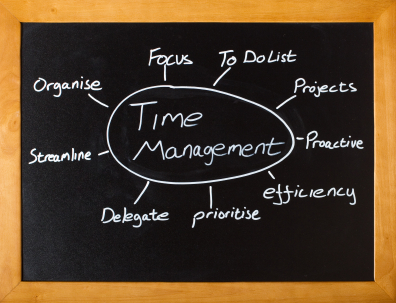
You Have All The Time There Is

Do you frequently use the excuse  that you don’t   have enough time to . . .  Network?  Spend  time  with the kids?  Exercise?  Learn to ski?  Write  a book?  It’s an excuse I frequently hear in my coaching practice.    The reality is that you have  all the time that there is.  There are 24 hours in a day, 168 hours and 10,080 minutes in a week.   That is the same amount of time that Galileo, Thomas Edison (1093 patents), Benjamin Franklin  (an author, printer, political architect, scientist, musician, postmaster,  inventor,  activist, librarian, statesman, and diplomat) and Martin Luther King (you know what he did) had.  How is it that they were more productive with their 168 hours than we are?

There are only four things to do with your “To Do” list:

  1. Do it.
  2. Delegate it.
  3. Postpone it.
  4. Forget it.

Otherwise known as DDPF.  As you can see, more of these are “To Don’ts” than “To Dos.”  All of the best time management systems help you figure out how to do these things.  Systems such as  Franklin Covey and  Getting Things Done help you prioritize and decide whether to DDP or F.  How many times have you started a new process/system with hope and motivation?  Me too.

There are two key parts to managing your time to accomplish your goals and live your dreams:  Goal clarity and focus.

To do this, make a list of all your goals.  Include short term, medium term and long term.  Get them all down.  Look at the list.  Are there groupings you can make, i.e. House Improvements/Get Out of Debt/Get Promotion?  Once this list is completed and you’ve put them into appropriate groupings, pick the most important.  Think long term.  What will make the rest of your life better if you get it done?  For example, if you look at the list above–house/debt/promotion–it might be ‘get a promotion’ because that would help you get out of debt and let you hire someone to do the house improvements.  If you’re anything like me, you’ll resist picking only one.  Do it anyway.  If nothing else on your list got done, what most needs to get done?  OK, now you can pick the next most important and the next most important.   Stop at three.  You have now gotten goal clarity.

Think creatively.  Are there ways besides you doing it to get some of these things done? Get rid of as many as possible–delegate them, postpone them, or decide not to do them for a while.

The next thing that you need to do is FOCUS.  We all pride ourselves on being multi-taskers.  Me too.  Multi-tasking just slows you down, though.  You really can only focus on one thing at a time.  AT. A. TIME.  That time might just be seconds, or minutes, but your mind can only think of, work on, deliver one thing at a time.  If you don’t agree, just indulge me for a little longer.  The system that  I use is called Personal Kanban, http://www.personalkanban.com.  This system has helped me enormously to focus and get things done.  It has you divide all your “to do” tasks into:  Waiting/Doing/Done.  If you follow it, it forces a level of focus that allows you to concentrate and finish things.  You should put the tasks that will help you accomplish your first three priorities in the “Waiting” category (you can use white boards, paper, an app, or a Powerpoint slide, which is what I use).  Select the first task, move it into the “Doing” category, and as one of my favorite bosses says, “Get Ur Done.”

I was shocked at how much this system improved my ability to deliver the important things that I was working on.  You won’t accomplish your important goals and life dreams, however, if you’re just taking your list of things to do and skipping the prioritization.  Once you’ve gotten your top three done, then you can move on.  You can look at it from a “today” perspective, or a “this week” or even a “this year” perspective.  Just get focused on what is important and concentrate on those things.

Try it.  See what you think.

4 Comments

Filed under Executive Development, Goal Setting, Time Management