Category Archives: Executive Development

How Can I Know What I Want To Do (When I Grow Up)?

It’s OK to have changing career goals.  It is normal, in fact.  Many people either fell into their current career by happenstance, or they selected one that is no longer (or never was) satisfying.  They struggle to figure out the “right” career for themselves.  What is not OK, though,  is to continue in a career that doesn’t fit without a plan to change it.

There are some questions that help you figure out what’s best for you:

First the Practical Questions:

  1.  How much money do you need to make?
  2. What skills do you have/can you get?
  3. How much time do you have to reach your goals?
  4. What do you believe are the  real constraints that exist in deciding what you want to do? (Things like you probably can’t take your three year old into the rainforest while you do eco-research.)

Now the Passion Questions:

  1. What rewards are most important to you to get from a job? Money? Learning? Creative outlet? Status?
  2. What are you doing when you forget what time it is?
  3. What would you do if you won the lottery and money was no object?
  4. What energizes you?
  5. What are your favorite activities?

Now What?

Martin Yate, who writes lots of career books, http://www.knockemdead.com, suggests in his book, Knock ’em Dead Secrets & Strategies for Success in an Uncertain World, that you should actually have three careers .  He advises that you have a core career (the one that pays your bills), an entrepreneurial career (the one where you venture into ways of making money and growing a business beyond your core career) and your dream career (the one that you really want to do, all other things being neutralized).

When I applied this idea, I found it easier to succeed at my core career.  I was focused on growing skills in my core career that would benefit my other two careers.  Working toward my dream career, even though I was living with my core career, energized me.  I found myself able to be more effective at all of them because the passion was back in my work life.  I saw the benefits of my “day” job for my dream job and had a completely different attitude.  My different attitude and increased effectiveness led to more rewards in my core career, and that in turn sped up the process of moving toward my other two careers.

So . . . What Do You Want to Be When You Grow Up?

Leave a comment

Filed under Career Development, Career Goals, Executive Development, Goal Setting

WOW! Yourself

Do You Stand Out?

When was the last time your boss, your employees, your customers thought “Wow!” after dealing with you?   You know, the way that Jeremy Lin has recently “wowed” us all.  If it hasn’t happened in a while, maybe you should spend some time thinking about what it would take to do it.  In these economic times, people (bosses, employees, customers) make choices.  Our goal should be for them to choose us when it happens.  What have we done for them lately to make them think it’s a no brainer?  What makes you stand out from the crowd?

If you’re like most of us, most of your work time is spent on autopilot.  You do a good (enough) job, you get bound up in the day to day goings on, and then you go home. There is a Harvard study that looked at employee performance that indicated that employees were delivering about 20% of their capability.  Maybe you’re above that.  You’re not at 90% of your capability, though, most of the time.  That is how we perform when we are completely motivated and passionate about what we’re doing (and we’re doing it well).  Autopilot isn’t good enough if you want to be  the first one chosen for a promotion or the last chosen for a layoff .  You need to stand out.  You need to WOW.

What Does It Take To WOW?

What it takes to really WOW someone is situation and personality dependent.  What really gets one boss’ attention isn’t the same that gets another boss’ attention.  The most important way to do this is to take yourself off autopilot and focus on creating a WOW.  How can you take it to a new level?  What kind of performance/delivery/effort will get noticed.   It is almost never working more hours or completing more tasks.  It is usually the delivery, timing, or “never thought of that before” content of the product you present.

But . . .

I can hear you now:  “I do deliver.  It just doesn’t get noticed.”  You may be right.  Think of the example of Jeremy Lin.  He delivered.  (For those of you who don’t have  a clue who Jeremy Lin is, he’s a great basketball player–Google him).  He delivered consistently in high school and in college.  He especially delivered, though, when the opportunity arose, when the challenge was greater.  He got noticed by the Harvard recruiter when his team was playing tougher teams.  He got noticed by all of us when he got the opportunity to play and key players on his team were hurt.  Are you ready if you get the opportunity?  Can you create an opportunity to get a WOW reaction?

Key to WOW

The key to WOW is not working harder.  It is delivering something that really hits the spot that is above expectations.  That takes some strategic thinking.  What would that be in your situation?  Think about it.

WOW! is Recession Proof Insurance. 

Leave a comment

Filed under Career Development, Executive Development, Recession Proof

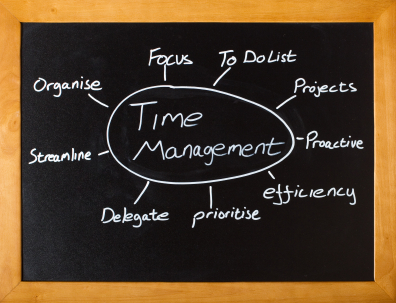
You Have All The Time There Is

Do you frequently use the excuse  that you don’t   have enough time to . . .  Network?  Spend  time  with the kids?  Exercise?  Learn to ski?  Write  a book?  It’s an excuse I frequently hear in my coaching practice.    The reality is that you have  all the time that there is.  There are 24 hours in a day, 168 hours and 10,080 minutes in a week.   That is the same amount of time that Galileo, Thomas Edison (1093 patents), Benjamin Franklin  (an author, printer, political architect, scientist, musician, postmaster,  inventor,  activist, librarian, statesman, and diplomat) and Martin Luther King (you know what he did) had.  How is it that they were more productive with their 168 hours than we are?

There are only four things to do with your “To Do” list:

  1. Do it.
  2. Delegate it.
  3. Postpone it.
  4. Forget it.

Otherwise known as DDPF.  As you can see, more of these are “To Don’ts” than “To Dos.”  All of the best time management systems help you figure out how to do these things.  Systems such as  Franklin Covey and  Getting Things Done help you prioritize and decide whether to DDP or F.  How many times have you started a new process/system with hope and motivation?  Me too.

There are two key parts to managing your time to accomplish your goals and live your dreams:  Goal clarity and focus.

To do this, make a list of all your goals.  Include short term, medium term and long term.  Get them all down.  Look at the list.  Are there groupings you can make, i.e. House Improvements/Get Out of Debt/Get Promotion?  Once this list is completed and you’ve put them into appropriate groupings, pick the most important.  Think long term.  What will make the rest of your life better if you get it done?  For example, if you look at the list above–house/debt/promotion–it might be ‘get a promotion’ because that would help you get out of debt and let you hire someone to do the house improvements.  If you’re anything like me, you’ll resist picking only one.  Do it anyway.  If nothing else on your list got done, what most needs to get done?  OK, now you can pick the next most important and the next most important.   Stop at three.  You have now gotten goal clarity.

Think creatively.  Are there ways besides you doing it to get some of these things done? Get rid of as many as possible–delegate them, postpone them, or decide not to do them for a while.

The next thing that you need to do is FOCUS.  We all pride ourselves on being multi-taskers.  Me too.  Multi-tasking just slows you down, though.  You really can only focus on one thing at a time.  AT. A. TIME.  That time might just be seconds, or minutes, but your mind can only think of, work on, deliver one thing at a time.  If you don’t agree, just indulge me for a little longer.  The system that  I use is called Personal Kanban, http://www.personalkanban.com.  This system has helped me enormously to focus and get things done.  It has you divide all your “to do” tasks into:  Waiting/Doing/Done.  If you follow it, it forces a level of focus that allows you to concentrate and finish things.  You should put the tasks that will help you accomplish your first three priorities in the “Waiting” category (you can use white boards, paper, an app, or a Powerpoint slide, which is what I use).  Select the first task, move it into the “Doing” category, and as one of my favorite bosses says, “Get Ur Done.”

I was shocked at how much this system improved my ability to deliver the important things that I was working on.  You won’t accomplish your important goals and life dreams, however, if you’re just taking your list of things to do and skipping the prioritization.  Once you’ve gotten your top three done, then you can move on.  You can look at it from a “today” perspective, or a “this week” or even a “this year” perspective.  Just get focused on what is important and concentrate on those things.

Try it.  See what you think.

4 Comments

Filed under Executive Development, Goal Setting, Time Management

Get Ready to Lose Your Job

I hope you never need this advice. Chances are good, though, that you will–even if you are a high potential, can’t-do-anything-wrong super dooper employee. Most of us end up out on the job hunt street in our career.

The number one thing that you can work on right now to prepare for that day is to build your network. When clients end up on my coaching doorstep after a recent job loss, their number one regret is that they didn’t keep their network current. Ask yourself: if you lost your job next Monday, how many people in your network are familiar enough with what you do to be able to start referring you for job leads immediately? How many of them would want to? How many of them have you had contact with in the last month? year? five years? How many of them do you have current contact info on? When someone starts a job search, it usually takes months to rebuild a network. Months! How can I get your attention about this?

Yeah, I know. You don’t have time. You have to do (keep) your current job, take the kids to soccer, re-do the house.
If you lost your job, you would find the time. And you would wish you had done it sooner.

So what do you do? Start with two things:

1) Join, attend and volunteer for the appropriate professional groups. The people who do jobs like yours belong to these groups. They are also the first to know of the job openings in their own companies. There is a reason that the leadership of these professional groups (PMI, SHRM, ASTD) move easily from company to company. They know people.

2) Join/update/participate in LinkedIn. LinkedIn is becoming the largest recruiting tool in many professions. Join groups that interest you. Post answers/questions when appropriate (but don’t spam people with it).  Set your LinkedIn account up so that you get an email update of changes in your network.  Reach out to those who have had a change.  It doesn’t take much time, but it keeps that contact warm.  Post things of interest periodically.

Approximately 75% of jobs are landed through knowing someone who has some connection to the job (in the same company, referral, etc). 75%!  Make sure you are ready if you ever need it.

1 Comment

Filed under Executive Development, Job Hunt, Networking