Monthly Archives: March 2012

Are You On Your Way to Failure?

Derailment

Executive coaches call it “derailment.”  Derailment happens when the organization has made an assessment of you that basically takes you off the planned (yours or the organization’s) trajectory of your career.  Derailment is usually talked about from the perspective of the organization–you’re not living up to expectations.  From your perspective, you feel that you’re stuck.  You are not moving up anymore.  The new jobs, promotions, or opportunities have dried up.  This might take a while to notice.  It usually is noticed by the organization much sooner than you notice it.

Evidence of Being “Stuck”

The evidence is easy to miss at first.  The  way most people notice it is that things are just not going the way they used to go.  It’s longer between promotions.  Someone else is asked to do the special project (or in some organizations, you are the ONLY one asked to do the special projects.)  Your boss doesn’t ask your opinion as much.  You feel shunted aside.

Being Able to See That You’re Stuck is a Lucky Break

Ironically, one of the things most likely to cause you to get off your career track is what has helped you succeed so far.  In other words, as you move up levels in organizations, your strengths become weaknesses.  Just like the things that worked for you in 5th grade, didn’t work for you in high school;  the things that make you an outstanding individual contributor don’t make you a great team leader. If you are highly technical or detail oriented, and you’ve been praised for your tactical implementations, the next level may require you to let go of some of the details and to see the big picture.  If you have been a heads down technology star and got promoted to be a manager, you need to pull your head up and learn how to deal with interpersonal issues.  If you have always been the smartest one in the room, but a little abrasive, and you suddenly are leading a team, that abrasiveness will cause you real problems.   If you are the boss’ favorite and suddenly that boss is gone, you’re in trouble.

The sooner you see that there is an issue, the sooner you can start working on it and the sooner you can get back on track.  It’s possible to re-energize your career, even at the same company.  The first step is to understand what it is that is in your way.

Most Common Causes of Derailment

Lois Frankel lists common reasons for derailment in her book, Overcoming Your Strengths, Harmony Books (New York 1997):

  • Poor People Skills
  • Inability to Work As Part of a Team
  • Inattention to Image and Communication Style
  • Insensitive to One’s Effect on Others
  • Difficulty Working with Others
  • Too Broad or Too Narrow a Vision
  • Lack of Concern for Customer or Client  Needs
  • Works in Isolation.

The Center for Creative Leadership includes others based on their research:

  • Too loyal to a boss or organization
  • Too personable–relies on relationships to get things done
  • Inability to adapt
  • Failure to deliver results

But None of Those Are True of Me

I don’t know about you, but I wouldn’t want to admit any of those are true of me.  The easiest way to be able to see the “off-ness” of your behavior is to frame your observations as if you just started this job, instead of finishing up your 15th year with the organization.  When you are new to an organization, you are MUCH more open to reading the signs that people are putting out.  You are much more able to assess your performance in the eyes of the people who matter.

If you feel “stuck,” start paying attention to how you interact with the organization.  Ask someone you trust to tell you the truth.  (Remember telling the truth in this situation is very hard).  Listen, and thank the person.  Then leave.  Don’t get defensive.  Don’t debate.  Leave.  Think about it.  The person might not be right, but s/he is giving you important information–a perception about you.  You know they say perception is reality.  You can’t deal with it if you don’t know it.  You need to spend some time thinking about it.  And maybe getting some more feedback.  And maybe observing yourself in the organization as if you were a new employee.

Expect Emotions

This is not easy.  Expect to be unhappy about it.  That’s ok.  Give it some time.  It’s better to feel it now than when they fire you.  You’ll get over it.  Once you can be more rational about it, figure out what you are going to do about it.

Leave a comment

Filed under Career Development, Derailment, Executive Development, Personal Change

Who’s Looking Out For You?

Are you a “High Po?”

A ‘High Po’ is a high potential employee.  Organizations identify employees as high potential and invest in those employees.  Companies identify and invest in high potentials (HPs) because they believe that the HPs have the qualities necessary to be future leaders of the organization.  Companies send HPs to training, give them developmental assignments, provide them with mentors, and monitor them throughout their careers.

There is nothing scientific about how organizations choose these people.  Some organizations do formalized evaluations that includes an evaluation of the traits, skills, and behaviors of employees who have succeeded, other organizations simply ask managers. Sometimes organizations are right in who they choose.  Sometimes they are wrong.  Sometimes they leave people who are just as much a HP sitting on the sidelines.

So What?

If you haven’t been picked as a High Po, does that mean that you can’t/won’t be a leader in your organization?  Absolutely not.  Organizations need great leaders with skills that will help the organization deliver the strategic goals.  If you show the organization that you have the ability, skills, and energy to lead, they will completely forget that they didn’t identify you earlier.

So, What Do You Do?

Treat yourself like a High Po.  Create your own Executive Development program focused on growing your own skills.  Provide yourself with the training, developmental assignments, get yourself a mentor and measure your progress. Don’t wait for your  organization to do it for you (and, by the way, a lot of organizations don’t do it for anyone). Who cares as much about your career as you do?  Who wants you to succeed as much as you do?

So, How Do You Do It?

Here’s a list to start:

  1. What skills does the organization need to be able to deliver on its strategic goals?  From people at your level?  From leaders?  From Executives?  What’s missing? (This is important because this is the way the organization thinks).
  2. What is the  (yours/your organization’s )assessment of you? What strengths do you have? What gaps are there in your skill set/experience?
  3. Looking at your skills/strengths and the org’s needs–where do you fit?  Where do you want to fit?.  What can you do to start to fill in skill gaps?  What kind of class/reading/experience can you give yourself to start developing your skills?

Here are three books that might help:

Take Yourself to the Top by Laura Berman Fortgang

  Changing on the Job by Jennifer Garvey Berger

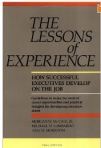
   Lessons of Experience by Morgan McCall

Leave a comment

Filed under Books, Career Development, Executive Development, Personal Change

Manage Your Boss, Manage Your Career

Isn’t Your Boss Suppose to Manage You?

Yeah, in an ideal world, your boss is smarter than you.  You boss is a leader who inspires and motivates you.  Your boss knows how to get the roadblocks out of your way and how to recognize all the things that you do right and guide you through your mistakes.  That’s the ideal world.  If you’re lucky you have a few of these bosses in your career.

They Aren’t All Like That

Bosses come in all shapes and sizes.  Some of them are brilliant and some of them are stupid.  Some of them are leaders and some of them are spineless.  Some of them know how to do your job better than you do and some of them don’t.  As you move up the organization, if you’re good, at some point you surpass your boss’ skills and ability.   If you’re lucky, that doesn’t happen until you become CEO.  For most of us, though, it happens significantly before that.

I talk to clients all the time who rail against this.  They have a certain belief set about how bosses should be and they waste an awful lot of time and energy being frustrated because bosses don’t live up to expectations.

Get Over It

I’m sorry to be unsympathetic, but we don’t get to have the boss of our choice.  Even those of us who take a job specifically to work  for a certain boss frequently get moved away from that boss long before we’re ready.  Bosses are just one more factor that you need to learn to manage to succeed at your job–just like resource constraints, market changes, difficult employees,  partnerships, etc.

Managing your boss is critical to your career success.  The great guru on management, Peter Drucker, not only said that you needed to learn to manage your boss, but also said it was “easier” than managing your subordinates.  He suggested that you write a semi-annual letter to your supervisor (that was the word they used in the 1950’s when he wrote this) that details not only your goals  for the next six months, but also what help you need from him.

So How Do You Manage a Boss?

The first thing to do is to see the world (and you) through your boss’ eyes.  Give the boss the benefit of the doubt.  What is s/he trying to do?  Why?  Remember, almost no boss gets up in the morning with a goal of making your life miserable.  They are trying to get their boss’ goals accomplished.  They are working with the resources they have (including intelligence, patience, knowledge, or lack thereof).  Your boss will be more inclined to help you/be the leader you want if s/he sees how that will get his/her goals accomplished.  Remember, bosses are people too.  They need help, appreciation, respect, and friendship just like the rest of us.  This means that you don’t make your boss’ life worse, you try to make it better.

Build the Relationship. Focus on the relationship.  Don’t take it for granted. The inability to get along with your boss is a major career derailer.  Just like marriages take work, boss/subordinate relationships take work.  Don’t wait for your boss to take the initiative–it is as much on you.

Communicate, communicate, communicate.  No surprises (either way) is an incredibly good rule.  Don’t assume that your boss knows things because you do.  Make sure your boss knows what you do to make his/her life better.  How else will they find out?

But You Don’t Want to be a Kiss Up, Right?

Don’t be a kiss-up.  Find a way to reframe the relationship so that you can be comfortable with managing your boss.  The last time I had a boss who absolutely make me crazy and I couldn’t find any comfortable way to interact, I decided to think of my boss as if she were a customer.  I was able to treat her with respect and do what she needed no matter how she treated me, and then I was able to walk away without being emotionally wounded.  Try reframing the way you see the relationship.

All of this will help make you a better boss, too.

2 Comments

Filed under Career Development, Executive Development, Goal Setting, Personal Change